

Disliked{quote} There are 4 things fueling risk assets right now: 1. The ceasefire between the US and Iran is holding, despite the Hormuz blockade. 2. Iran earned nearly $5bn in oil exports in the past month alone, the longer the blockade goes on, the more they stand to lose, which increase the chances of further talks. The US made it clear that the blockade is indefinite, that adds pressure. 3. Since the blockade was enforced, there are reports of oil tankers leaving the Strait of Hormuz, explaining the slide in Crude OIL. 4. There are now indeed reports...Ignored
Would like to share my thoughts.
This is my side trading (passion) and my main company actually trades physical commodities including gasoil, gasoline and crude.
1. I agree. The blockade definitely impacts their crude export. However, aromatics like Cx+ Xylene and aromatics (components used for gasoline) was already offline due to their petrochemicals being decimated earlier. What is more damning is actually their metals export to China.. However, most of it goes overland anyway to Turkye where it is tolled and then onward to Europe. It is the China portion that is severely affected / Asia region.
I would think Europe will definitely be less affected as sanction materials from both Russia and Iran still goes to their market, just albeit with an increase cost as it tranships and tolls in other "friendly" countries. In this case, UK does not enjoy jack shit from this and takes the full brunt of the shortfall of materials.
2. Granted that UK has the North Sea production and buys most of it's energy from Norway, i don't think this is incredibly damaging to their energy security. So less impact vis-a-vis Iran.
3. For other countries like JPY, KRW, CNH and Asia EM, the oil blockade is definitely more sensitive.
Which brings me to my next point. Fundamentals.
The UK's economy is abysmal. So is its manufacturing, production and migrant problem. They truly face the risk of stagflation. Granted that this reaction could be pricing in 2 rate hikes to the UK, most of the time, rate hikes going into a stagnating economy always precedes another severe fall (see case study on Asian Tigers) and untendable.
From an economic standpoint,
Granted, if we use GEK-FISHER (OECD PPP) method, GBP/USD should be approximately 1.45 - 1.55 but this is obviously wrong as it has been severely under the the GEK-FISHER consecutively over a long time span.
If you use a simple Big MAC index to account for PPP method, GBP/USD should be around 1.28 - 1.32, which i am targeting.
Perhaps what i am trying to say is that the rally and cheer on the back of this blockade is definitely reactionary and does not actually benefit the UK as much as Asia and even Europe.
Of course i could be wrong (i have made and lost more than i care to admit over 10 years) but the UK does not seem to be in a more favourable position UNLESS this war pulls then back closer to the EU and reintegration which would definitely push them to the 1.45 - 1.55 region.
My gut feel is that the Hungarian election played a bigger part in moving both EUR and GBP with people getting tired of Far right and their confrontational policies, potentially benefiting both EUR and UK.
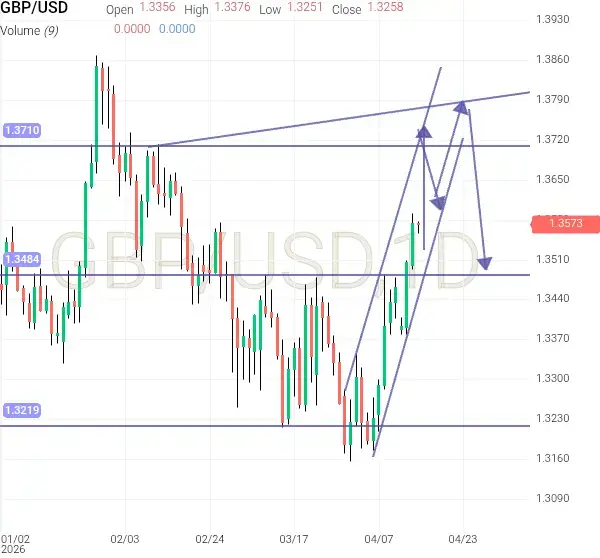
Technically:
However, i do have to admit that it is bidded and there are signs of strengths on the Cable, whether by way of dollar weakness or GBP strength until we retake 1.34800 and then 1.33xx, it could easily retake 1.36xxx region. 1.42 is definitely line in the sand and the completion of the inverted multi year head and shoulders.
Whatever it is, it is in an accumulation range between 1.30 <> 1.38 and because of that, the probability of a sustanined uptrend without a change in policy / economy decrease each time we approach those extreme levels.
Thanks for this forum and thread to post my thoughts.
Attached Image (click to enlarge)

2