

As I have said numerous times here before, I have NO HOBBIES...other than trading - and mostly it's because I enjoy the mental stimulation, and the challenges of consistently beating the trading game.
*Unless you consider gambling in a casino a hobby, which I consider it more of a vacation from reality than a "hobby", plus I get everything there for free - suites, meals, and other comps. - like cash the casino gives me to play with (all depending on which casino I am in) - so what's not to love...lol!.
For the past 2 days (Sat. & Sun.), it has been raining and since I can't really do anything outdoors, I have been focusing on reading some new trading materials and watching some new trading videos.
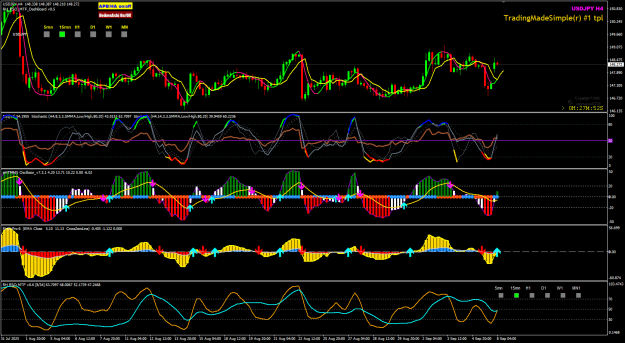
And, I also have been refining my current trading template even more by learning some important nuances about different ways to use the "RSO Watchlist" for entries (for trading stocks, commodities & Futures).
Below are the notes that I saved (much of it from one trader - who also owns a trading firm), knowing full well that I would share them here, so I hope everyone enjoys reading/learning what I am sharing below because overall it took me many hours to prepare and then compile this list.
--------------------
First and foremost, you need...
1. You NEED a successful trading mentor to coach you and:
a. To help you figure out what "type" of trader you are going to be: a scalper, day trader, swing, investor, etc.
b. To teach you WHAT to trade
c. To teach you HOW to trade
d. To teach you WHEN to trade
d. To teach you WHY you are consistently winning or WHY you are consistently losing
e. And then guide you along your journey until the mentor is no longer needed
2. Traders who use R:R's like: 1:1 or 1:4 or 1:5 R:R are the most profitable scalpers/swing/day traders. I have never seen a consistently successful trader who goes for 1:2 or 1:3 R:R be consistently profitable
3. Good scalpers/swing/day traders who go for a 1:1 R:R can have very high win rates - as in easily 80%+
4. Swing traders make the most money of the 3 (scalpers/swing/day traders), and they typically hold their trades for days but rarely for weeks or more
5. I have never seen a trader with that has a high winning percentage (70%+) and also have a high R:R both at the same time - best go for one or the other
6. The Forex markets tend to have ranging markets most often and so Supply & Resistance Zones and/or Key Supply & Demand Levels are more important in the Forex than in stocks, commodities, and Futures - because the "nature" of the Forex markets is different from stocks, commodities, and Futures
7. Always place your Profit Targets just barely inside of the most current Supply & Resistance Zones and/or Key Supply & Demand Levels
8. Always place your Stop a short distance outside of the most current Supply & Resistance Zones and/or Key Supply & Demand Levels
9. When building a position - start small and increase the size of the position as the trade goes in your favor
10. Exit your whole position all at once
11. Trade management is more important than the entry, such as the: Initial Stop placement, trailing Stops, adding on, scaling out, etc.
12. Never ever risk more than 1% on any one trade.
13. When day trading always try to get in some exercise time before you start trading as it will help you "clear your head"
14. Stocks, commodities, and Futures are easier to trade than the Forex
15. Use the "Pitchfork" pattern to enter trades (back in the direction and the resumption of the trend - *Continuation Trade) whenever possible. This is the pattern for Long trades (below) - short entries are the exact opposite pattern and colors:

16. Always listen to RobinHood's trading advice...ROFL!
--------------------
So I'll end this post with one of my favorite quotes that is in my book:
"If you think education is expensive...then try ignorance"
*Unless you consider gambling in a casino a hobby, which I consider it more of a vacation from reality than a "hobby", plus I get everything there for free - suites, meals, and other comps. - like cash the casino gives me to play with (all depending on which casino I am in) - so what's not to love...lol!.
For the past 2 days (Sat. & Sun.), it has been raining and since I can't really do anything outdoors, I have been focusing on reading some new trading materials and watching some new trading videos.
And, I also have been refining my current trading template even more by learning some important nuances about different ways to use the "RSO Watchlist" for entries (for trading stocks, commodities & Futures).
Below are the notes that I saved (much of it from one trader - who also owns a trading firm), knowing full well that I would share them here, so I hope everyone enjoys reading/learning what I am sharing below because overall it took me many hours to prepare and then compile this list.
--------------------
First and foremost, you need...
1. You NEED a successful trading mentor to coach you and:
a. To help you figure out what "type" of trader you are going to be: a scalper, day trader, swing, investor, etc.
b. To teach you WHAT to trade
c. To teach you HOW to trade
d. To teach you WHEN to trade
d. To teach you WHY you are consistently winning or WHY you are consistently losing
e. And then guide you along your journey until the mentor is no longer needed
2. Traders who use R:R's like: 1:1 or 1:4 or 1:5 R:R are the most profitable scalpers/swing/day traders. I have never seen a consistently successful trader who goes for 1:2 or 1:3 R:R be consistently profitable
3. Good scalpers/swing/day traders who go for a 1:1 R:R can have very high win rates - as in easily 80%+
4. Swing traders make the most money of the 3 (scalpers/swing/day traders), and they typically hold their trades for days but rarely for weeks or more
5. I have never seen a trader with that has a high winning percentage (70%+) and also have a high R:R both at the same time - best go for one or the other
6. The Forex markets tend to have ranging markets most often and so Supply & Resistance Zones and/or Key Supply & Demand Levels are more important in the Forex than in stocks, commodities, and Futures - because the "nature" of the Forex markets is different from stocks, commodities, and Futures
7. Always place your Profit Targets just barely inside of the most current Supply & Resistance Zones and/or Key Supply & Demand Levels
8. Always place your Stop a short distance outside of the most current Supply & Resistance Zones and/or Key Supply & Demand Levels
9. When building a position - start small and increase the size of the position as the trade goes in your favor
10. Exit your whole position all at once
11. Trade management is more important than the entry, such as the: Initial Stop placement, trailing Stops, adding on, scaling out, etc.
12. Never ever risk more than 1% on any one trade.
13. When day trading always try to get in some exercise time before you start trading as it will help you "clear your head"
14. Stocks, commodities, and Futures are easier to trade than the Forex
15. Use the "Pitchfork" pattern to enter trades (back in the direction and the resumption of the trend - *Continuation Trade) whenever possible. This is the pattern for Long trades (below) - short entries are the exact opposite pattern and colors:
Attached Image (click to enlarge)
16. Always listen to RobinHood's trading advice...ROFL!
--------------------
So I'll end this post with one of my favorite quotes that is in my book:
"If you think education is expensive...then try ignorance"
Always a Student, Never a Master - Emulate What Works
22