

Highlights of the latest Market Research release on EUR.
Full research available here.

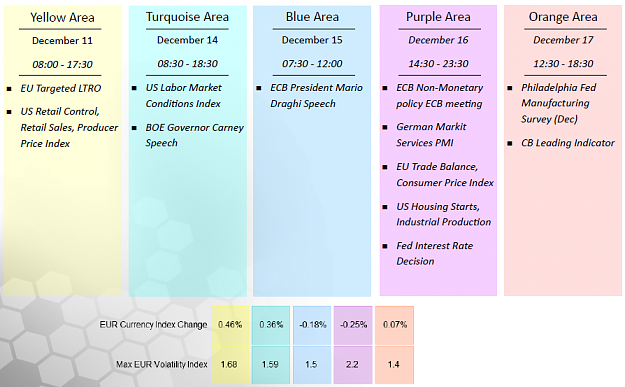
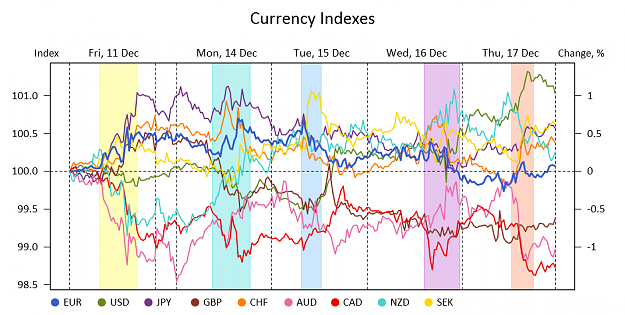
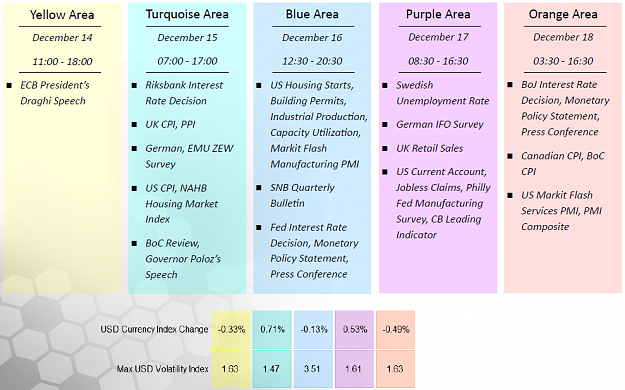
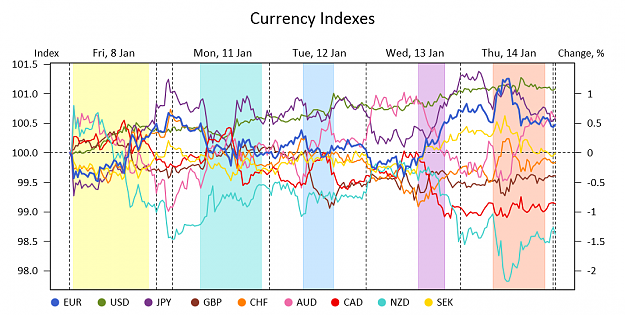
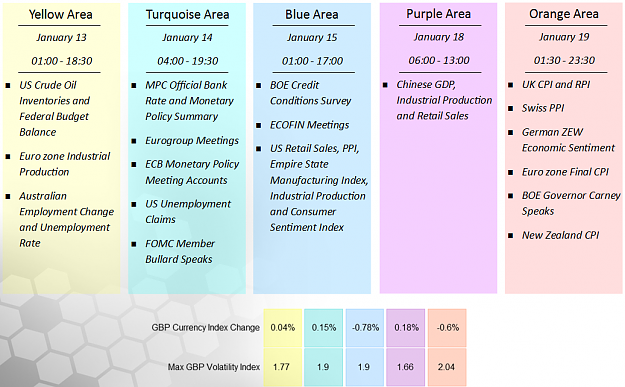
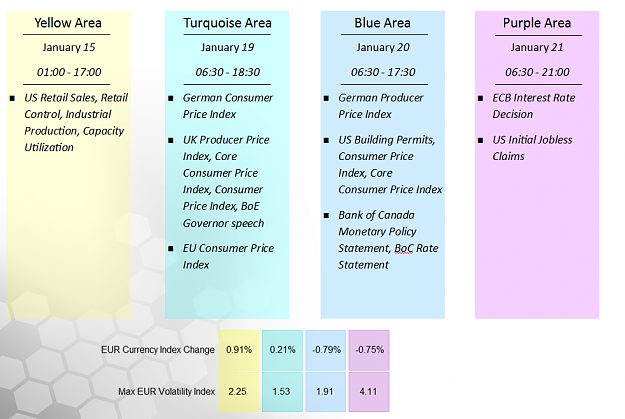
The releases of significant economic news, which notably influenced the currencies, were concentrated in the first and the last days of the observed period. Only a few releases took place on Monday-Tuesday, which, in fact, significantly affected the market. However, the EUR index was quite changeable during these days. For example, on Tuesday it started to increase, continuing to retrace its ECB-surge and extending the previous gains, while German trade figures had a minor effect on the currency. Germany's trade surplus shrank in October, but was still higher than expected. Both exports and imports declined more than expected.

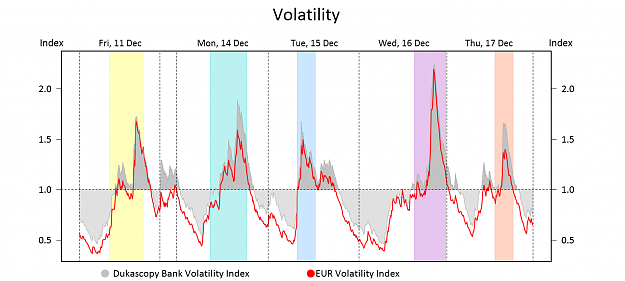
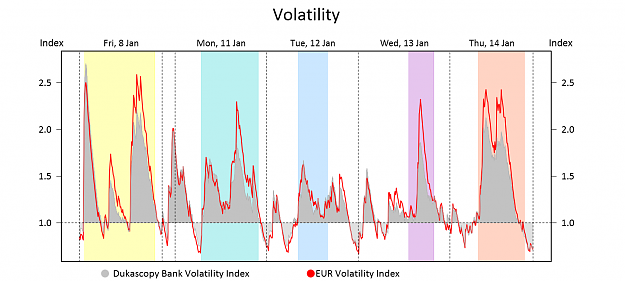
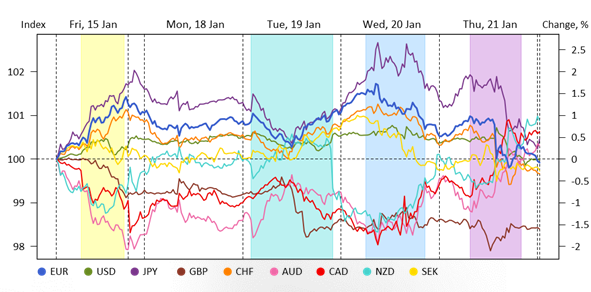
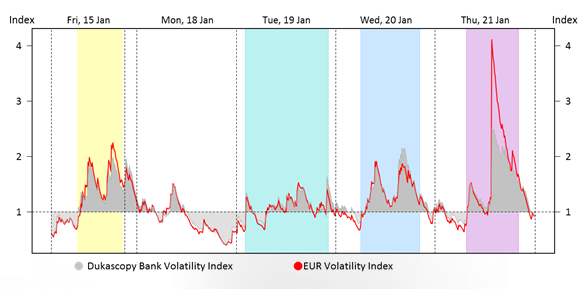
Market volatility was evolving on an ordinary pattern during the week, showing moderate turbulence during the US and Asian trading session. The most changeable and thus the most volatile was the Swedish Krona, whose index spent 57% of time above the 1.0 point level. The Yen, in turn, was the most tranquil in terms of elevated volatility portion, as the world's third-largest economy avoided technical recession and added to speculation that the BoJ will refrain from more stimulus in January. The most conspicuous surge of the market volatility was observed on Friday, when the market was awaiting Canadian employment reports, and early on Thursday morning, after the publication of extremely strong Australian employment data that wiped out the New Zealand dollar's post-RBNZ meeting gains.

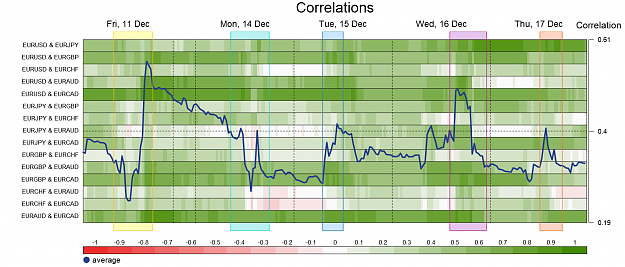
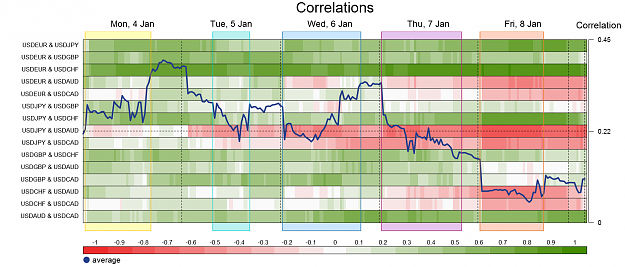
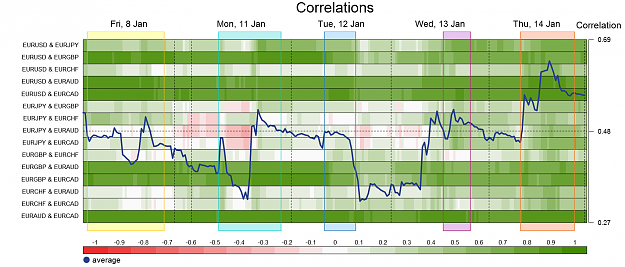
The Euro’s correlation levels picked up from the previous period’s readings, with the composite’s values shifting away from the lower part of the monthly distribution. Among the EUR/USD components, the most notable overall strengthening occurred in the pair’s bonds with EUR/GBP, EUR/CHF, and EUR/CAD. EUR/CAD and EUR/GBP, along with EUR/JPY, posted the greatest average correlations with EUR/USD, with all values at or above the 0.70 points level. Moreover, EUR/USD-EUR/CAD and EUR/USD-EUR/AUD components lifted their averages notably higher than the long-term values, posting 0.10 points over the annual means.

Full research available here.
Attached Image (click to enlarge)
The releases of significant economic news, which notably influenced the currencies, were concentrated in the first and the last days of the observed period. Only a few releases took place on Monday-Tuesday, which, in fact, significantly affected the market. However, the EUR index was quite changeable during these days. For example, on Tuesday it started to increase, continuing to retrace its ECB-surge and extending the previous gains, while German trade figures had a minor effect on the currency. Germany's trade surplus shrank in October, but was still higher than expected. Both exports and imports declined more than expected.
Attached Image (click to enlarge)
Market volatility was evolving on an ordinary pattern during the week, showing moderate turbulence during the US and Asian trading session. The most changeable and thus the most volatile was the Swedish Krona, whose index spent 57% of time above the 1.0 point level. The Yen, in turn, was the most tranquil in terms of elevated volatility portion, as the world's third-largest economy avoided technical recession and added to speculation that the BoJ will refrain from more stimulus in January. The most conspicuous surge of the market volatility was observed on Friday, when the market was awaiting Canadian employment reports, and early on Thursday morning, after the publication of extremely strong Australian employment data that wiped out the New Zealand dollar's post-RBNZ meeting gains.
Attached Image (click to enlarge)
The Euro’s correlation levels picked up from the previous period’s readings, with the composite’s values shifting away from the lower part of the monthly distribution. Among the EUR/USD components, the most notable overall strengthening occurred in the pair’s bonds with EUR/GBP, EUR/CHF, and EUR/CAD. EUR/CAD and EUR/GBP, along with EUR/JPY, posted the greatest average correlations with EUR/USD, with all values at or above the 0.70 points level. Moreover, EUR/USD-EUR/CAD and EUR/USD-EUR/AUD components lifted their averages notably higher than the long-term values, posting 0.10 points over the annual means.
Attached Image (click to enlarge)