

Highlights of the latest Marker Research release on EUR.
Full research available here.

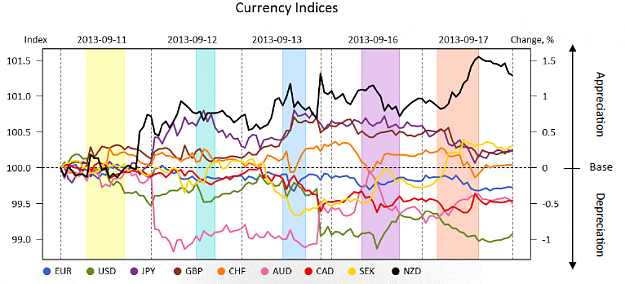
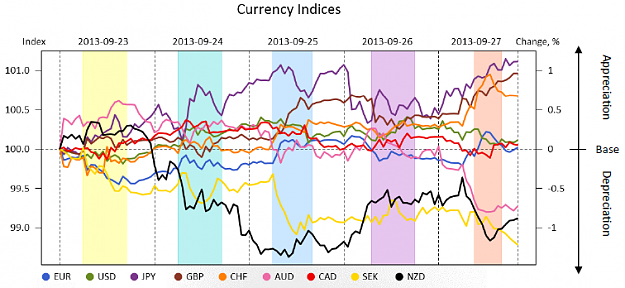
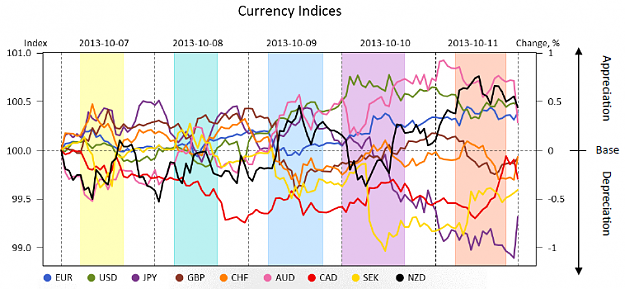
As it is apparent from the trajectory of the equally-weighted index of the common currency throughout the previous week, there was nothing that could have returned the Euro its former attractiveness. Consequently, the instrument continued to grind lower, this time losing 0.9% of its worth within five days. The news directly responsible for such a poor performance was lacklustre growth of Eurozone retail sales volume. Gloomy reports on the economic well-being of Germany also contributed to the continuous sell-off by accelerating it.

There were in fact a few attempts to halt the decline, namely during the ECB press conference (when the bank revised its forecasts upwards) and amid the disappointing U.S. employment change figure (which allowed the Euro to gain at the expense of the greenback). However, they were instantly negated by the dominantly negative sentiment and thus failed to change the generally bearish course of the single currency.
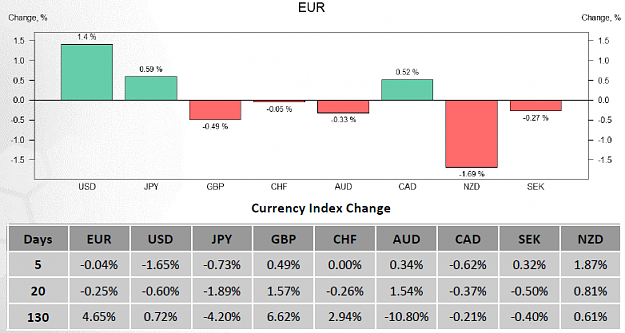
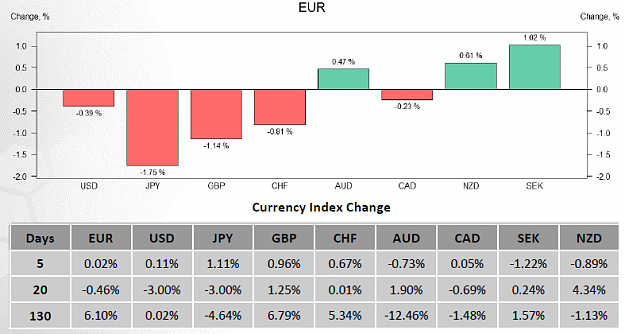
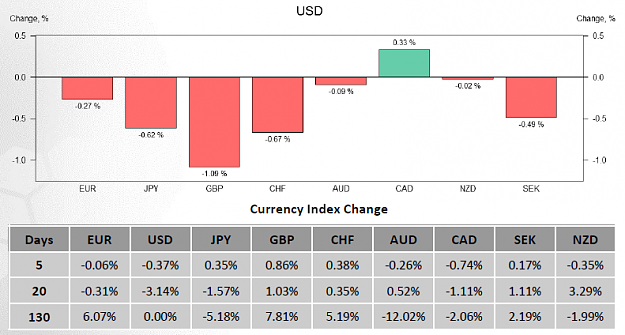
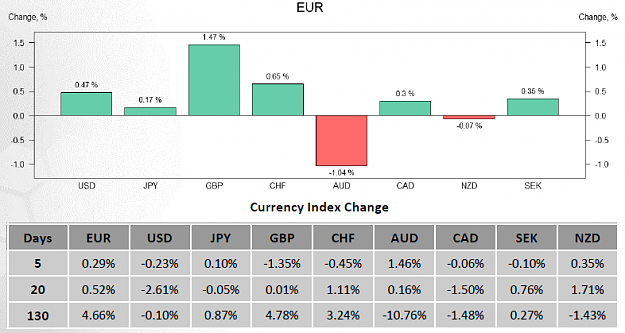
Meanwhile, in the longer time perspective, the index is only 0.2% lower than it was 20 trading days ago. If we look at an even greater time span—six months, than the Euro becomes one of the most bullish currencies (+3.26%), only behind the British Pound (+7.00%) and the Swiss Franc (+3.34%).

Full research available here.
Attached Image (click to enlarge)
As it is apparent from the trajectory of the equally-weighted index of the common currency throughout the previous week, there was nothing that could have returned the Euro its former attractiveness. Consequently, the instrument continued to grind lower, this time losing 0.9% of its worth within five days. The news directly responsible for such a poor performance was lacklustre growth of Eurozone retail sales volume. Gloomy reports on the economic well-being of Germany also contributed to the continuous sell-off by accelerating it.
Attached Image (click to enlarge)
There were in fact a few attempts to halt the decline, namely during the ECB press conference (when the bank revised its forecasts upwards) and amid the disappointing U.S. employment change figure (which allowed the Euro to gain at the expense of the greenback). However, they were instantly negated by the dominantly negative sentiment and thus failed to change the generally bearish course of the single currency.
Meanwhile, in the longer time perspective, the index is only 0.2% lower than it was 20 trading days ago. If we look at an even greater time span—six months, than the Euro becomes one of the most bullish currencies (+3.26%), only behind the British Pound (+7.00%) and the Swiss Franc (+3.34%).
Attached Image (click to enlarge)