LOL. Don't give me any ideas, I might use Mr Hankey from South Park.
Someone on my msn list had this pic and I laughed at it. I asked her wthell was it? She said some Japanese anime character or something. Looks hilarious so I decided to use it
Ignored
Yeah he kind of reminds me of Gumbie and Pokey, from about 50 000 years ago, those two were made of kind of rubber and they did some really old short films (not sure what you call them?) with them, then they had gumbie and pokey figures, you know the kind with the bendy wire inside so you could move their arms and legs...oh god those days are lightyears away from Pokemons and all the crap my kids play with..sniff sniff...anyway your poo guy qualifies hehe, take care Im off to work, Raz
Looks like Gchf made a new low, guess it's time to exit my long.
Still looking for my next entry on AJ,
need to make a decision on EU, still holding the long, but i have an AH at 1.5700 - any views on this?
Ignored
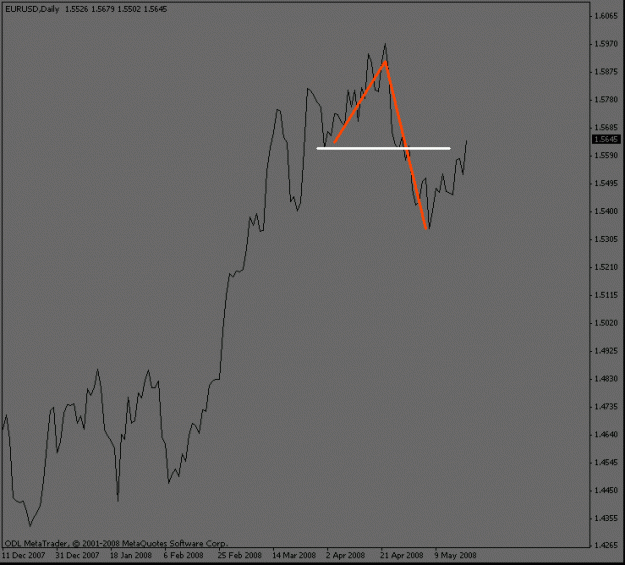
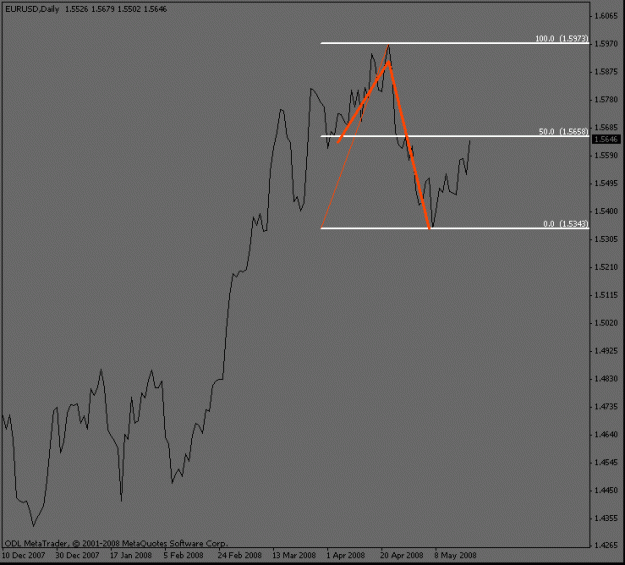
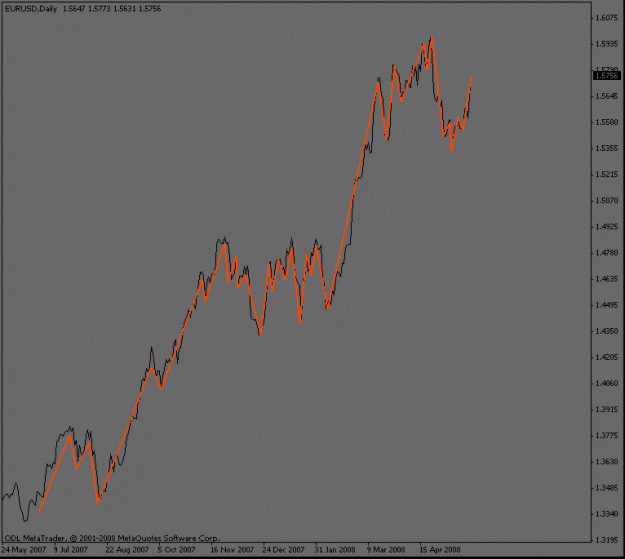
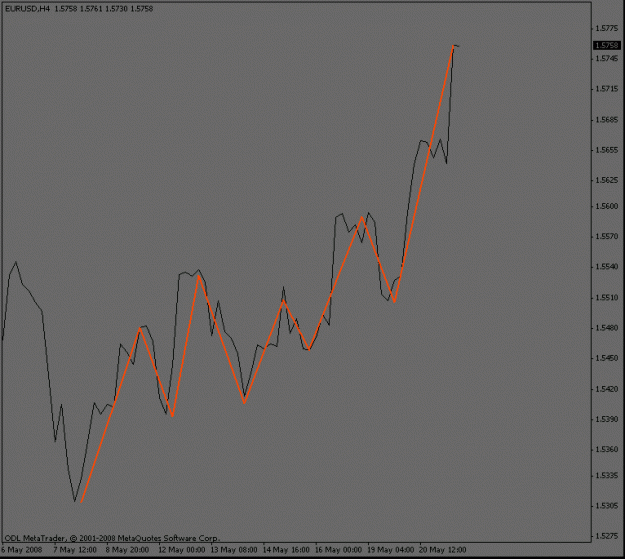
Even though I don't trade on the daily charts, this is what I see. If the daily wave did collapse and we are heading down lower, I'd start watching the 50.0% retracement area. This doesn't mean it's headed down, this just means to be more cautious. As long as we're making higher highs/lows on the 4 hour you should be ok.
I think if I was in your situation, I may offload some of my profits when I approach 1.5700 just to cover myself since I'd have the AH to deal with. That or... you could watch what price does when it approaches. Wait and see approach?
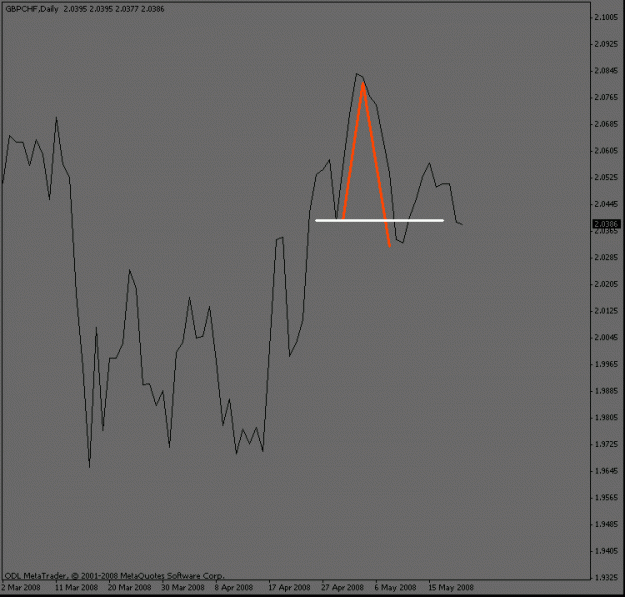
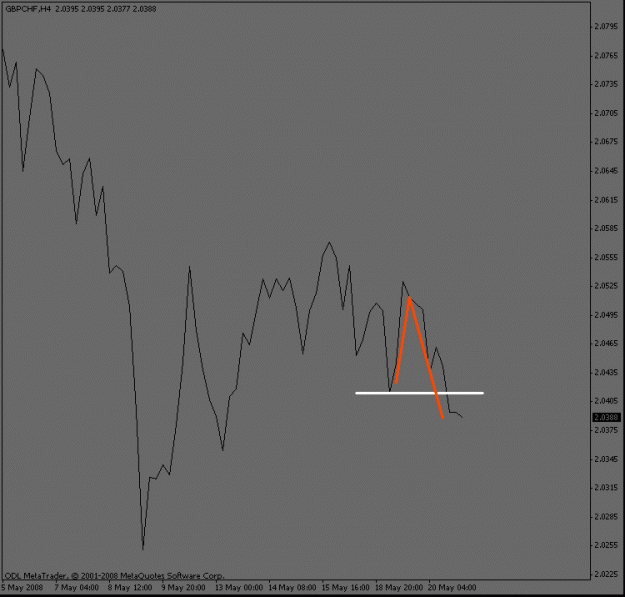
As for gbpchf. That trade seems a little "iffy" to me. A wave collapsed only to have price break the wave to the upside again. That leaves me with a bias to the longside still.
Decided to collapse my euro position at +163 pips profit. Don't like the movement going on in this area. Might be because of that 50.0% retracement so I'm going to wait and see.
The problem with wave trailing I found, wich I was testing this method earlier is that some waves seem to be quite large and your stops might endup 200+ pips below high of the price, and then collapse that wave, giving market back alot of pips, wich while I was testing it made me uncomfortable.
What I was thinking to fix that, is to lets say use as a guide of around 150 pips as TSL , when you see that waves higher low is lets say at 170 pips below, you use that as a stop, or if you see that higher low is 300 pips away from the high made, you look for a good spot to cut into that large wave and place your stop somewhere in the middle of it or, below 50% fib .
Another thing I found that could be intresting about using line chart, is that quite often when wave brakes on the line chart, but turning to lets say candle chart you find that that wave did not brake the low of previous wave, more times it will continue in the direction it did, as if it did not brake that wave.
Just been reading all the different approaches to adding on. Raz's approach makes the most sense.
What I've been testing is a little different from all of the ideas mentioned. After a wave breaks to the upside or collapses, I will wait for that pullback. When I think I have spotted it, I will throw in 1% to test the waters out, if it starts to go in my favour I add another 1%. I'm basically building up my position on that pullback but once it breaks the previous wave's high, I stop. I then follow through by trailing my trade using the waves (wave trailing lol). So when the market creates a higher low, I move all of my stops to that point. I basically keep doing this until a wave collapses and knocks me out. When this happens I wait for a pull back and reverse the trade.
Just something to think about. The initial wave that breaks should be the one that holds the big position. The higher up the market moves, the greater the risk of a wave collapsing so be careful of adding on. It's best to grab it at the bottom then leave it. At that point it's more a point of managing your trade/risk.
Ignored
How will you determine when to throw in another 1% position? And how will you coordinate to be in with a full position before it breaks the high ?
The problem with wave trailing I found, wich I was testing this method earlier is that some waves seem to be quite large and your stops might endup 200+ pips below high of the price, and then collapse that wave, giving market back alot of pips, wich while I was testing it made me uncomfortable.
What I was thinking to fix that, is to lets say use as a guide of around 150 pips as TSL , when you see that waves higher low is lets say at 170 pips below, you use that as a stop, or if you see that higher low is 300 pips away from the high made, you look for a good spot to cut into that large wave and place your stop somewhere in the middle of it or, below 50% fib .
Another thing I found that could be intresting about using line chart, is that quite often when wave brakes on the line chart, but turning to lets say candle chart you find that that wave did not brake the low of previous wave, more times it will continue in the direction it did, as if it did not brake that wave.
Ignored
Kaunasny
You are right about some waves being large and I was having a discussion on this with another trader earlier this morning. While this is true, I'll leave this up to the trader. Personally I may look at the smaller waves if such a move happened. Like I mentioned in my previous post, I'm trying not to set any solid rules right now because I know every trader is different. There's also more than one way to do this as you've pointed out in your other post.
Your other point mentioned about waves that collapse but on the bar/candle chart it doesn't show as that... I haven't studied this since I'm sticking strictly to line charts at the moment. There most likely will be cases when this happens and it's just something you have to deal with. It's something that may happen just like when you're wrong on a trade. You just have to take it on the chin and move on.
btw, the 50.0% idea by cutting into a larger wave isn't a bad idea, you can try it, I'll leave that up to you.
How will you determine when to throw in another 1% position? And how will you coordinate to be in with a full position before it breaks the high ?
Ignored
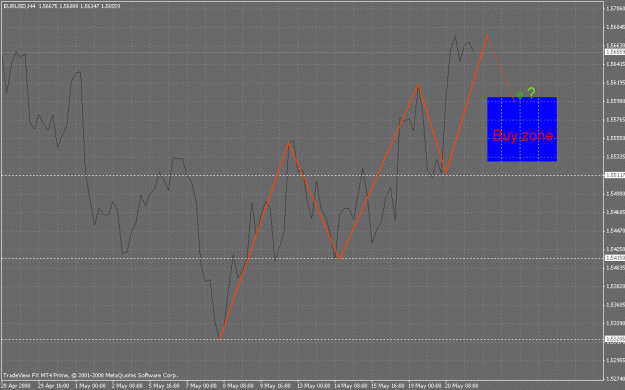
If we take the eurusd's recent move for example. After the drop, price started turning around. You could visually see this on the 4 hour. We could enter a small position then. You could also apply the 50.0% retracement and enter. When you notice price building up momentum (I use my round number analysis I did a while back to help me with this), then you add more.
Like the stops, there's a few ways to do this, I just pointed out the way I'm doing it now. It may change in the future but for now I'm comfortable doing it this way. If you see price turning around, take a small bite, wait and see what happens. If you're wrong, then just don't add. If you're right and the market starts to show signs of this, drop the bomb LOL
Took a small euro short based on the daily chart. Not sure how this will play out but we'll see.
Reason for the short
1. Daily wave collapsed as indicated on my daily chart
2. Price has now retraced back up to the 50.0% area
3. Using the concept of how I determine a trend, I believe we may be in the early stages of a larger move down (I could be wrong which is why I'm taking a small position). If I'm right, this next move should not produce a peak higher than the recent one at 1.6000 or thereabouts. If I notice a steady decline and the market starts to show signs of another collapse, I will add to this position. IF I'm wrong, then I'm wrong and will take a hit on the smaller position.
In the past month or so I have noticed my journal grow at quite a fast pace. Because of this, I have decided to add a navigational feature to it (to makes things more user friendly both for me and other traders visiting). In the next few days, I will be creating an index (which will be posted in post#1) on various things which I consider important in my trading. This will range anywhere from PA, time analysis, round number analysis, the wave exercise or posts on risk/money management.
Even though I'm not trading this pair, I decided to follow through with my analysis. Based on the daily chart, we did have a wave collapse. On the 4 hour chart I mentioned in an earlier post things looked a little "iffy" because waves were breaking to the downside, then to the upside. We now have another 4 hour wave which collapsed leaving me biased to the downside.
Intresting, I was thinking to buy euro at around 1.5690.
Yesturday we had a strong move up, showing that downward movement has ended.
I expected a retrace to lets say around 1.5600 but did not happen, thought this is quite normal because move has just started and might have alot of momentum to go on longer without bigger correction.
Looking at H4 chart, waves are breaking very nicely to the upside.
Thought I decided not to buy it because I think its a risky trade.
We're at 50% fib from move down of 1.6012 to 1.280's so this might be turning around point or retrace point atleast.
We had a strong move up yesturday without any retracment and It's just too risky to enter now, better wait for retracement.
I'll wait for prices to go below 1.5600 and start looking for longs, I want 1.5550 thought.
If we take the eurusd's recent move for example. After the drop, price started turning around. You could visually see this on the 4 hour. We could enter a small position then. You could also apply the 50.0% retracement and enter. When you notice price building up momentum (I use my round number analysis I did a while back to help me with this), then you add more.
Like the stops, there's a few ways to do this, I just pointed out the way I'm doing it now. It may change in the future but for now I'm comfortable doing it this way. If you see price turning around, take a small bite, wait and see what happens. If you're wrong, then just don't add. If you're right and the market starts to show signs of this, drop the bomb LOL
Ignored
Yes, I was doing some research how to build your position up early but again I find difficulties.
Lets take for example eur/usd the recent move up. Now on H4 chart we could start seeing when its turning around. Price reaches 1.5500 and then turns up closing on my chart at 1.5525 , enter there? Still too risky? 1 H4 period maybe not enaugh? Lets wait for another, next period closed at 1.5530, still an increase but weak. But oh well lets enter 1% there so we enter at 1.5530 ,
Now the difficult part comes in. When do we enter another 1% ?
Looking at 1 minute chart , the first biggest retracment was at 1.5585 , a retracement of 17 pips and the top of the wave is at 1.5595. So we missed the whole move and we entered only with 1% on this nice move up.
Later we had slighly bigger retracments but that was already above the last wave and we should have our full position in before we go over the top of previous wave.
So retracements and waves will not work for building a position as your likely to waste the whole move with a minimum position. As we can see even 1 minute chart could not help. Unless we expand our trading time chart and move on to daily, then we could find time frames to look for waves and retracments.
Another solution would be to add to a position a certain # of pips up. Lets say 10 pips up ( wich is very tight ) you add another 1%, or after 20 pips up you add another and so forth before you reach your full position.
Yes, I was doing some research how to build your position up early but again I find difficulties. Lets take for example eur/usd the recent move up. Now on H4 chart we could start seeing when its turning around. Price reaches 1.5500 and then turns up closing on my chart at 1.5525 , enter there? Still too risky? 1 H4 period maybe not enaugh? Lets wait for another, next period closed at 1.5530, still an increase but weak. But oh well lets enter 1% there so we enter at 1.5530
Ignored
Again, as mentioned in a previous post, building up your position if you decided to take that route is dependent on the trader. In your above example even if we only had 1% on the trade and it moved 100 pips, that's nothing to laugh about. I would take that any day over a loss.
Now the difficult part comes in. When do we enter another 1% ? Looking at 1 minute chart , the first biggest retracment was at 1.5585 , a retracement of 17 pips and the top of the wave is at 1.5595. So we missed the whole move and we entered only with 1% on this nice move up. Later we had slighly bigger retracments but that was already above the last wave and we should have our full position in before we go over the top of previous wave. So retracements and waves will not work for building a position as your likely to waste the whole move with a minimum position. As we can see even 1 minute chart could not help. Unless we expand our trading time chart and move on to daily, then we could find time frames to look for waves and retracments. Another solution would be to add to a position a certain # of pips up. Lets say 10 pips up ( wich is very tight ) you add another 1%, or after 20 pips up you add another and so forth before you reach your full position.
Ignored
You don't HAVE to enter in another 1%. You could break your position of the trade up into halfs, thirds, quarters etc. So... when the market looks like it's going up, you enter with a half position. When momentum builds up, you can add the other half. This is just another way to manage your risk. Again, I'm leaving this open to the trader because we all trade differently. Razldazl for example uses the Pascal Triangle but I find that too complicated. Works for her, doesn't work for me.
When you pointed out that you could "waste a whole move" with only a minimum position. What if the move was 500 pips and you had 1% on it? I'm not sure about you but I'd be more than happy to have caught that trade even if I was only in it with 1%. At least I would be capitalizing on that opportunity.
I am deliberately leaving the take profits, stops, exits, money management, position sizing etc open. These are dependent on the individual. The other reason is because I certainly don't have the answers to all of the above since this approach is still new to me. What I did want to do was to share with everyone my analysis of waves. Whether you choose to use it in your trading or not is up to you.
Here is how I see the daily waves. I try not to "add" waves to make one big one unless there's quite a bit of noise. The reason for this is because I need to see the individual waves. The way they break gives me hints at where they're headed next.
What you suggested in this chart is the right idea. I drew my waves at the bottom differently though but even if you mapped them out the way you did, you still would have gotten the direction right.
You are starting to get the hang of it though. This is important because this will tell you the direction. How you trade it in that direction is up to you. You could decide that the line chart maybe isn't for you and you prefer candles/bars. The important thing is that you recognize price is biased to the upside and there is an opportunity for you to trade (remember the hunter vs trader analogy I made a while back).
Yes, but sometimes there is noise that might throw you off or give you the wrong impresion.
Wouldn't it help ignoring very small waves?
It would get even simplier and maybe more accurate...
Like for example eur/usd on your chart broke the wave down and made you biased downward, while in my example it was all long.
Those smaller waves could be noise.
Yes, but sometimes there is noise that might throw you off or give you the wrong impresion.
Wouldn't it help ignoring very small waves?
It would get even simplier and maybe more accurate...
Like for example eur/usd on your chart broke the wave down and made you biased downward, while in my example it was all long.
Those smaller waves could be noise.
Ignored
Yes sometimes it could pose as a problem. In my chart none of the waves actually did break to the downside. I remember I made a trade and lost but had I left my stop more open I would have gotten away with it. If you're referring to my daily chart, it's more of a long term projection. Doesn't mean I'm right either.
If you look at gbpchf, that is a good example of what you're trying to explain. On my 4 hour one of the waves broke to the upside, but then it collapsed. After it collapsed, it went down only to break to the upside again. Then... last night I said the wave collapsed so I was biased to the short side. Well... look at where price is now. It plummeted so in the end I would have made all of those losses back. You tend to find that kind of noise more when price is consolidating. Sometimes the best thing to do then is to just wait and see what happens next.