



Tick Data Synchronization: Handling Multi-Asset HFT in MQL5
Mastering multi-asset High-Frequency Trading (HFT) requires more than just fast execution; it demands precise tick data synchronization. This guide explores the technical challenges of handling asynchronous data feeds in MetaTrader 5 and provides robust MQL5 frameworks for building time-aligned trading systems.
Introduction to the Asynchronous Challenge
In the world of High-Frequency Trading (HFT), time is the ultimate dimension. When developing multi-asset strategies—such as statistical arbitrage, triangular arbitrage, or cross-market hedging—the primary technical hurdle is not the speed of the CPU, but the synchronization of disparate data streams. In MetaTrader 5, every symbol operates on its own independent thread for data delivery. This means that a tick for EURUSD and a tick for GBPUSD arriving at the same millisecond in the real world might be processed by your Expert Advisor (EA) at different intervals due to network jitter, thread scheduling, and queueing latency.
To build a professional-grade HFT robot, you must move beyond the simple OnTick() event. You need a data-normalization layer that can align prices from multiple symbols into a coherent "market state" snapshot. Without this, your mathematical models will be calculating correlations and spreads based on "ghost prices"—stale data from one asset mixed with fresh data from another.
The Architecture of Multi-Asset Synchronization
The core problem is that OnTick() is triggered by the symbol the EA is attached to. If you are trading a spread between Gold (XAUUSD) and Silver (XAGUSD), and your EA is on the Gold chart, OnTick() will fire when Gold moves. But what if Silver moves and Gold doesn't? Your EA won't react unless you implement a multi-symbol listener.
Full article on the blog:
https://code88.site/blog/tick-data-s...-1774538728389
Mastering multi-asset High-Frequency Trading (HFT) requires more than just fast execution; it demands precise tick data synchronization. This guide explores the technical challenges of handling asynchronous data feeds in MetaTrader 5 and provides robust MQL5 frameworks for building time-aligned trading systems.
Introduction to the Asynchronous Challenge
In the world of High-Frequency Trading (HFT), time is the ultimate dimension. When developing multi-asset strategies—such as statistical arbitrage, triangular arbitrage, or cross-market hedging—the primary technical hurdle is not the speed of the CPU, but the synchronization of disparate data streams. In MetaTrader 5, every symbol operates on its own independent thread for data delivery. This means that a tick for EURUSD and a tick for GBPUSD arriving at the same millisecond in the real world might be processed by your Expert Advisor (EA) at different intervals due to network jitter, thread scheduling, and queueing latency.
To build a professional-grade HFT robot, you must move beyond the simple OnTick() event. You need a data-normalization layer that can align prices from multiple symbols into a coherent "market state" snapshot. Without this, your mathematical models will be calculating correlations and spreads based on "ghost prices"—stale data from one asset mixed with fresh data from another.
The Architecture of Multi-Asset Synchronization
The core problem is that OnTick() is triggered by the symbol the EA is attached to. If you are trading a spread between Gold (XAUUSD) and Silver (XAGUSD), and your EA is on the Gold chart, OnTick() will fire when Gold moves. But what if Silver moves and Gold doesn't? Your EA won't react unless you implement a multi-symbol listener.
Full article on the blog:
https://code88.site/blog/tick-data-s...-1774538728389
 Breakout Hybrid PRD EA: The Next Generation of Global Position Management
 The Big Picture: What Makes This EA Different?
 Core Architecture: Three Pillars of Innovation
 Global Position Management System
 Recovery Mode with Mathematical Precision
 Dynamic Global Break-Even
 Entry Logic: The Breakout Hybrid System
 EMA Trend Filter (200-period): Keeps you trading with the dominant trend
 Range Breakout: Enters only when price breaks recent consolidation
 RSI Momentum: Confirms the move has momentum behind it
 Innovative Features That Set This EA Apart
 Precise Pip-to-Dollar Conversion
 Intelligent Lot Size Management
 Comprehensive Error Handling
 HFT-like responsiveness for risk management
 Key Advantages of This Architecture
 Portfolio Thinking
 Dynamic Position Sizing
 Real-World Application
 Mathematical recovery logic (not emotional martingale)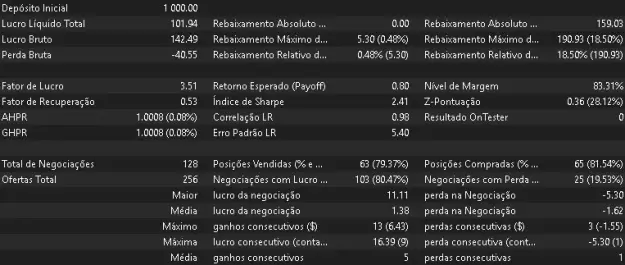
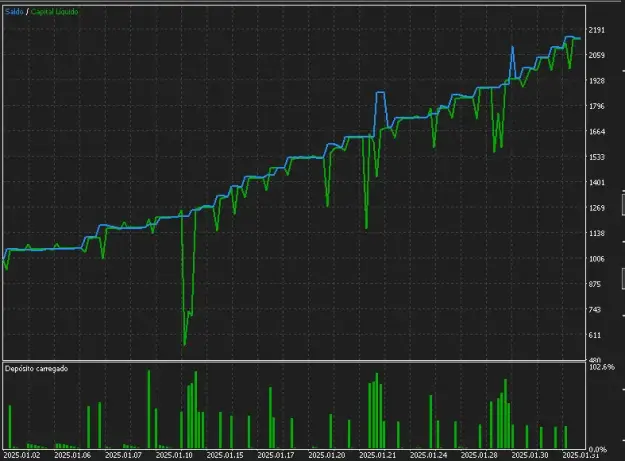

 Don't wait for time to pass; start turning the page today toward a financially healthier life.
 Get in touch with me via TELEGRAM:
  Contact me via TELEGRAM