



" The special thing is in the comments below  "
"
Introduction:
This post was created to share FREE trading methods — from basic to professional — that I personally use in my own trading. Everyone can study them, backtest each method on charts, and see which one fits best with your real trading style. You can then save and optimize it for yourself.
After many long years of trading, I can firmly say: there is no “holy grail” trading system. Don’t waste time looking for a 10/10 perfect method, and don’t try to tweak your stop loss just to make a “good” strategy look perfect — that goes against the law of probability in nature.
Always keep your risk under control. Never trade with the mindset that “today is the last day,” because the market always offers endless opportunities. If your account hits zero, no matter how skilled you are, it means nothing.
The best practice is to risk only 3–5% of your total account per trade.
If the market moves against your expectation, cut the loss — don’t hold out just because you don’t want to lose a few dollars. Many traders burn big accounts for the sake of small change.
Remember: “If you don’t take profit when it’s there, heaven and earth will punish you; if you don’t cut your losses, you’ll burn your account.”
1. Concept of RSI(14) Convergence and Primary Divergence 

2. Primary Convergence/Divergence Combined with Support and Resistance Zones 
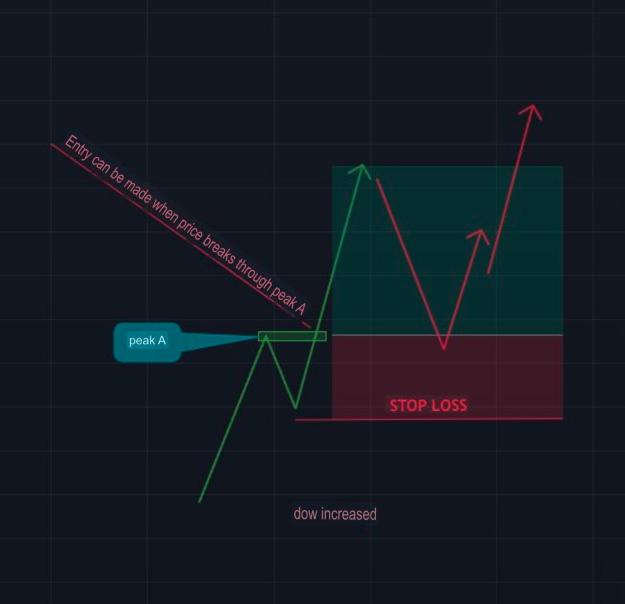
3. Dow Theory:
This is the primary foundation of trading that every trader must understand and master. 
4. Fibonacci:
Fibonacci is used to measure the main trend, helping traders estimate potential retracement or correction zones of the secondary trend in order to decide whether to buy or sell. 

5. The SonicR Method – also known as the “Value Zone” Strategy
This method relies on two key indicators: EMA34 and EMA89.
Theory:
When the price moves far away from both EMA34 and EMA89, it tends to retrace or converge back toward these moving averages.
Sometimes, the price may pierce below or above the EMAs, even momentarily breaking through, but as long as it does not form a new Dow break that confirms a trend reversal, and the price moves back above/below EMA34/89, this becomes a signal area to look for buy or sell entries.
Advantages: 

6. EMA34/89 – For Trend-Following Traders
This method is ideal for traders who prefer to trade with the trend, as it helps clearly identify the main direction of the market.
Theory: 
7. Keep a Trading Journal – Review Weekly and Monthly Results
Make it a habit to record every trade, and summarize your wins and losses on a weekly or monthly basis. This helps you measure how effective your trading really is.
If you experience losses even though you’re using a consistent trading strategy, it’s crucial to analyze why — because the human brain often repeats habits subconsciously.
If those habits are good, that’s fine — but when bad habits repeat, that’s when trouble begins.
Many traders fall into the “gambler’s mindset” — after a loss, they become emotional, wanting to win it back the same day. Suddenly, every chart looks like a new “opportunity,” and that’s usually when big losses start.
Sometimes, you might actually win those revenge trades, and your brain releases a small dose of dopamine, making you feel excited — but that reinforces a destructive pattern.
"Introduction:
This post was created to share FREE trading methods — from basic to professional — that I personally use in my own trading. Everyone can study them, backtest each method on charts, and see which one fits best with your real trading style. You can then save and optimize it for yourself.
After many long years of trading, I can firmly say: there is no “holy grail” trading system. Don’t waste time looking for a 10/10 perfect method, and don’t try to tweak your stop loss just to make a “good” strategy look perfect — that goes against the law of probability in nature.
Always keep your risk under control. Never trade with the mindset that “today is the last day,” because the market always offers endless opportunities. If your account hits zero, no matter how skilled you are, it means nothing.
The best practice is to risk only 3–5% of your total account per trade.
If the market moves against your expectation, cut the loss — don’t hold out just because you don’t want to lose a few dollars. Many traders burn big accounts for the sake of small change.
Remember: “If you don’t take profit when it’s there, heaven and earth will punish you; if you don’t cut your losses, you’ll burn your account.”
1. Concept of RSI(14) Convergence and Primary Divergence
- Convergence:
Occurs during a downtrend, usually near support zones or potential reversal areas of the main trend.
It signals that the price may stop falling or bounce upward in the short term.
In this case, the price forms lower lows, but the RSI forms higher lows. - Divergence:
Occurs during an uptrend, typically near resistance zones or potential reversal areas of the main trend.
It signals that the price may stop rising or enter a short-term correction.
Here, the price forms higher highs, but the RSI forms lower highs.
Illustration:
Attached Image (click to enlarge)
Attached Image (click to enlarge)
2. Primary Convergence/Divergence Combined with Support and Resistance Zones
- This setup works best in a sideways (range-bound) market, where price often reacts clearly at support and resistance levels.
- When RSI(14) convergence or divergence appears right at these key zones, it provides high-probability reversal signals.
- In such market conditions, traders can often achieve maximum profitability with a risk–reward ratio (RR) ranging from 1:1 up to 1:5.
Attached Image (click to enlarge)
3. Dow Theory:
This is the primary foundation of trading that every trader must understand and master.
- It works best when the market has a clear trend, identified through breaks of previous highs/lows (points A).
- You can enter a trade either at the breakout zone (marked in green) or when the price pulls back to retest that breakout level.
- The market will continue its main trend by forming new Dow continuations (higher highs in an uptrend or lower lows in a downtrend) until a reversal Dow structure appears — signaling that the current market cycle may be ending.
Illustration below shows typical scenarios:
Attached Image (click to enlarge)
Attached Image (click to enlarge)
4. Fibonacci:
Fibonacci is used to measure the main trend, helping traders estimate potential retracement or correction zones of the secondary trend in order to decide whether to buy or sell.
- Purpose: It helps identify where the market might pull back before continuing in the main direction.
- Drawback: Trading inside the secondary (counter) trend goes against professional trading principles, which generally advise not to trade corrections.
- Advantage: If the trade aligns correctly with the retracement and the market resumes the main trend, the profit potential is very large, often capturing the entire continuation move.
Usage conditions:
You must clearly identify the main trend (whether buyers or sellers are dominant). Therefore, this method is not recommended for beginner traders.
Personal note:
I often enter around the 0.5–0.618 Fibonacci retracement zone, combining it with additional confirmations such as RSI convergence/divergence or reversal candlestick patterns.
Stop loss (SL) and take profit (TP) can be flexible, but if fixed, they are usually set around the opposite Fibonacci zones (0.236 – 0.786).
Illustration for the theory:
Attached Image (click to enlarge)
Attached Image (click to enlarge)
5. The SonicR Method – also known as the “Value Zone” Strategy
This method relies on two key indicators: EMA34 and EMA89.
Theory:
When the price moves far away from both EMA34 and EMA89, it tends to retrace or converge back toward these moving averages.
Sometimes, the price may pierce below or above the EMAs, even momentarily breaking through, but as long as it does not form a new Dow break that confirms a trend reversal, and the price moves back above/below EMA34/89, this becomes a signal area to look for buy or sell entries.
Advantages:
- Offers long profit targets, often at previous highs/lows.
- Has a very high probability (80–90%) of breaking past previous highs and forming Wave 5 in Elliott Wave structure, meaning strong continuation potential if you can hold the trade.
- Works well on M15 and H1 timeframes for swing or short-term trading.
Disadvantages:
- In sideways markets, this strategy often triggers multiple stop losses, as price frequently crosses back and forth through EMAs.
- It’s best used only when the market is trending and has clear wave movement.
- Requires experience with Elliott Wave theory and a strong mindset to hold through temporary drawdowns.
Illustration for the method:
Attached Image (click to enlarge)
Attached Image (click to enlarge)
6. EMA34/89 – For Trend-Following Traders
This method is ideal for traders who prefer to trade with the trend, as it helps clearly identify the main direction of the market.
Theory:
- When price is above both EMA34 and EMA89, it indicates a bullish trend → look for Buy opportunities as the main strategy.
- When price is below both EMA34 and EMA89, it signals a bearish trend → focus on Sell opportunities.
- When price moves back and forth between EMA34 and EMA89, the market is likely sideways (ranging) → in this case, it’s better to stay out or use sideway trading methods such as trading support and resistance zones.
Illustration:
Attached Image (click to enlarge)
7. Keep a Trading Journal – Review Weekly and Monthly Results
Make it a habit to record every trade, and summarize your wins and losses on a weekly or monthly basis. This helps you measure how effective your trading really is.
If you experience losses even though you’re using a consistent trading strategy, it’s crucial to analyze why — because the human brain often repeats habits subconsciously.
If those habits are good, that’s fine — but when bad habits repeat, that’s when trouble begins.
Many traders fall into the “gambler’s mindset” — after a loss, they become emotional, wanting to win it back the same day. Suddenly, every chart looks like a new “opportunity,” and that’s usually when big losses start.
Sometimes, you might actually win those revenge trades, and your brain releases a small dose of dopamine, making you feel excited — but that reinforces a destructive pattern.


 )
)


