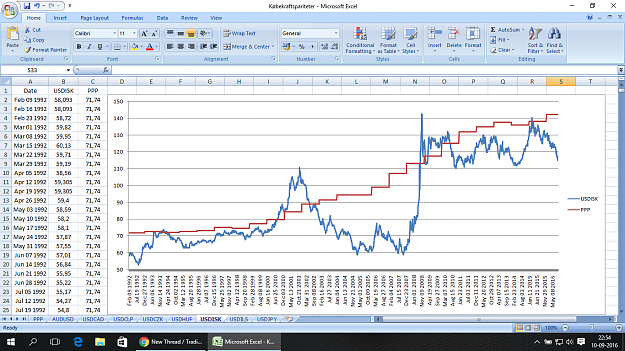
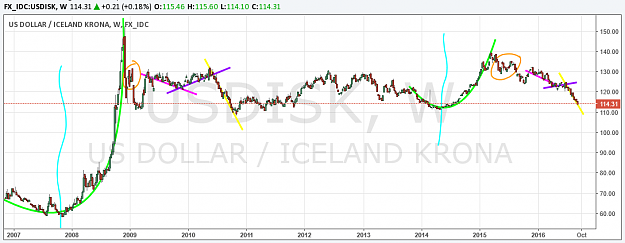
Is it time to buy USD/ISK? It is expected that the fed will raise interest rates and Iceland recently lowered their interest rate. USD is also undervalued vs the icelandic krona.
Attached Image (click to enlarge)
If slaughterhouses had glass walls, everyone would be a vegetarian!
Is it time to buy USD/ISK? It is expected that the fed will raise interest rates and Iceland recently lowered their interest rate. USD is also undervalued vs the icelandic krona. {image}
Ignored
Thank you for telling us this pair.
It is an interesting pair.
Is it time to buy USD/ISK? It is expected that the fed will raise interest rates and Iceland recently lowered their interest rate. USD is also undervalued vs the icelandic krona. {image}
Ignored
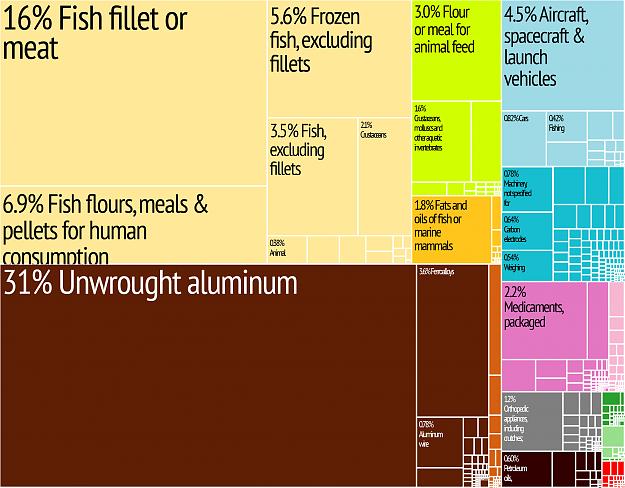
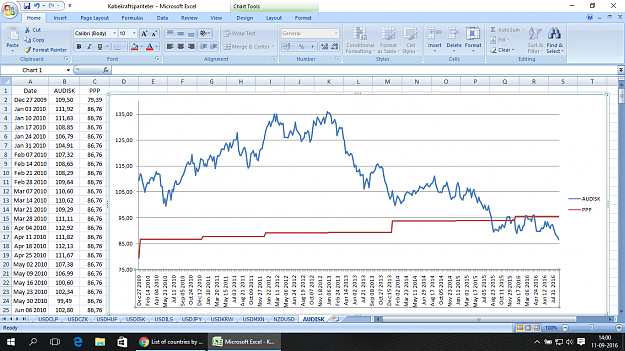
Your point on purchasing power parity is interesting, however you may want to hedge hedge the commodity exposure held by the iceland krona. Ice land is a commodity economy, and thus global commodities have a huge effect on price fluctuations. Perhaps try trading the ISKAUD, this will hedge your commodity exposure in turn reducing volatility.
Attached Image (click to enlarge)
Quant Trader - My Blog: quantstop.blogspot (dot) com
{quote} Your point on purchasing power parity is interesting, however you may want to hedge hedge the commodity exposure held by the iceland krona. Ice land is a commodity economy, and thus global commodities have a huge effect on price fluctuations. Perhaps try trading the ISKAUD, this will hedge your commodity exposure in turn reducing volatility. {image}
Ignored
I just calculated PPP for that currency pair. It also seems to be undervalued. The data are from the link below. Do you by any chance know what purchasing power parities FOR GDP means? I assume that there is a difference between just PPP and PPP for GDP but I'm not sure. http://stats.oecd.org/Index.aspx?datasetcode=SNA_TABLE4
Attached Image (click to enlarge)
If slaughterhouses had glass walls, everyone would be a vegetarian!
{quote}purchasing power parities FOR GDP means? {image}
Ignored
Yes, It is the GDP of a country adjusted for the purchasing power parity. For Example, adjusted for purchasing power, China has the largest economy, despite not being the largest in international dollars. China has a PPP GDP of 20.8 trillion vs a GDP of 9.24 trillion. This is due to a lower cost of living in China.
Quant Trader - My Blog: quantstop.blogspot (dot) com
{quote} Yes, It is the GDP of a country adjusted for the purchasing power parity. For Example, adjusted for purchasing power, China has the largest economy, despite not being the largest in international dollars. China has a PPP GDP of 20.8 trillion vs a GDP of 9.24 trillion. This is due to a lower cost of living in China.
Ignored
Don't you mean PPP adjusted for GDP. It's PPP numbers that is shown in the table but I don't know how they adjust for GDP.
If slaughterhouses had glass walls, everyone would be a vegetarian!
The cost of some goods as a percentage of GDP/citizen in country A VS. the cost of the same goods as a percentage of GDP/citizen in country B is used to calculate the GDP adjusted PPP exchange rate(if I'm not mistaken).
I'm wondering which dataset it would be best to use for forex trading. We can choose between
Purchasing power parities for GDP
Purchasing power parities for private consumption
purchasing power parities for actual individual consumption. http://stats.oecd.org/Index.aspx?datasetcode=SNA_TABLE4
If slaughterhouses had glass walls, everyone would be a vegetarian!
I'm wondering which dataset it would be best to use for forex trading. We can choose between Purchasing power parities for GDP Purchasing power parities for private consumption purchasing power parities for actual individual consumption. http://stats.oecd.org/Index.aspx?datasetcode=SNA_TABLE4
Ignored
A weighted ratio blending of all three (3). That should do the trick. :nerd: They have all been headed in roughly the same direction from 2008 through 2015.
FXLogix - The Dawn of the Modern Era in Currency Trading
I think that I understand how they do it now after reading this article. http://www.economist.com/content/big-mac-index The cost of some goods as a percentage of GDP/citizen in country A VS. the cost of the same goods as a percentage of GDP/citizen in country B is used to calculate the GDP adjusted PPP exchange rate(if I'm not mistaken). I'm wondering which dataset it would be best to use for forex trading. We can choose between Purchasing power parities for GDP Purchasing power parities for private consumption purchasing power parities...
Ignored
you may want to include some leading indicators, or at least inflation. PPP is a lagging indicator, so you also must take into account inflation differentials between FX pairs. one key trade I have my eyes on is THBUSD, It pays 3% interest, It has a favorable inflation difference, and it is undervalued in the PPP model.
Quant Trader - My Blog: quantstop.blogspot (dot) com
{quote} you may want to include some leading indicators, or at least inflation. PPP is a lagging indicator, so you also must take into account inflation differentials between FX pairs. one key trade I have my eyes on is THBUSD, It pays 3% interest, It has a favorable inflation difference, and it is undervalued in the PPP model.
Ignored
Where did you find PPP data for thailand? It's not included in the OECD table.
If slaughterhouses had glass walls, everyone would be a vegetarian!
{quote} Where did you find PPP data for thailand? It's not included in the OECD table.
Ignored
Data on thai ppp implied fx rates for USD/THB are available through quand, a free service for economists and quants: https://www.quandl.com/data/ODA/THA_...te-LCU-per-USD Beware however that Emerging markets don't work well with the PPP model.
Quant Trader - My Blog: quantstop.blogspot (dot) com
{quote} Data on thai ppp implied fx rates for USD/THB are available through quand, a free service for economists and quants: https://www.quandl.com/data/ODA/THA_...te-LCU-per-USD Beware however that Emerging markets don't work well with the PPP model.
Ignored
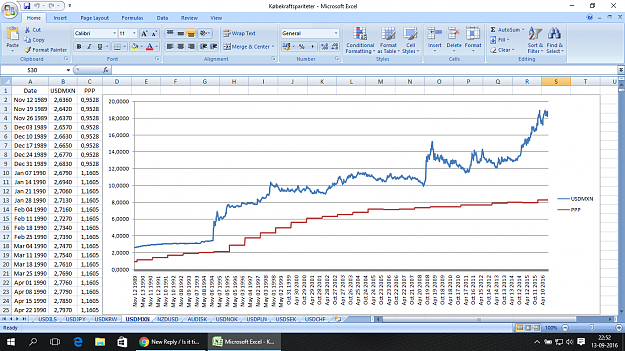
I guess you mean that PPP doesn't matter for emerging markets? Like the mexican peso being undervalued by 50+ % compared to the american dollar. I think that i understand why the mexican peso is undervalued(a lot of shorting to hedge) but for other emerging market currencies I don't understand it. Do you?
Attached Image (click to enlarge)
If slaughterhouses had glass walls, everyone would be a vegetarian!
{quote} I guess you mean that PPP doesn't matter for emerging markets? Like the mexican peso being undervalued by 50+ % compared to the american dollar. I think that i understand why the mexican peso is undervalued(a lot of shorting to hedge) but for other emerging market currencies I don't understand it. Do you? {image}
Ignored
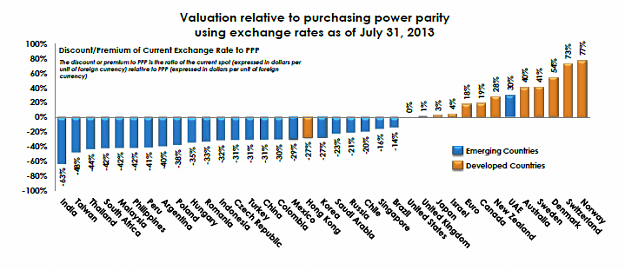
Historically in export driven EM currencies are undervalued, and as the markets "Emerge" the exchange rates tend to converge to their fair value. That's why GBP fell back to the PPP value when the brexit occurred, despite the GBP being historically overvalued. The more developed a nation, the more overvalued the currency becomes as it approaches the safe haven status.
Attached Image (click to enlarge)
Quant Trader - My Blog: quantstop.blogspot (dot) com
{quote} Historically in export driven EM currencies are undervalued, and as the markets "Emerge" the exchange rates tend to converge to their fair value. That's why GBP fell back to the PPP value when the brexit occurred, despite the GBP being historically overvalued. The more developed a nation, the more overvalued the currency becomes as it approaches the safe haven status. {image}
Ignored
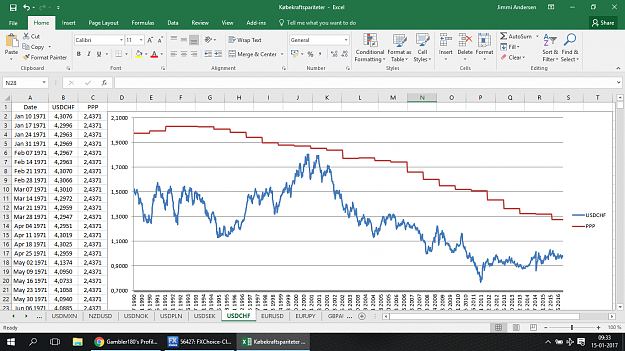
That makes sense. But how can USD/CHF be explained? They are both developed nations and safe havens but the CHF is always overvalued. My guess is historical inflation differentials. More inflation in the U.S. --> weaker dollar and falling PPP.
Attached Image (click to enlarge)
If slaughterhouses had glass walls, everyone would be a vegetarian!