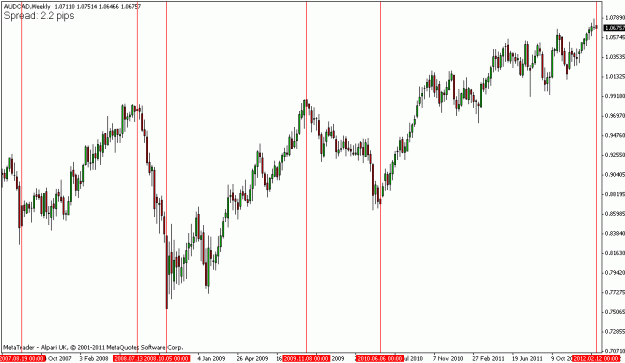


The purpose of this thread is to study the history of the different currency pairs and find fundamental explanations for the big moves we see on the larger timeframes. My hope is that we by studying the past can be able to anticipate what will happen in the future and get in early in a trend. I would like to do it in alphabetical order so we start with AUD/CAD. The chart below is divided into 14 different periods. If you would like to help with this project then choose one of the following periods and try to find a fundamental explanation for why USDCAD fell or increased in that period. When someone have given an explanation for why the pair fell or increased in a period I will update this thread and hopefully after some time and hard work we will have a complete list with explanations for why the different currency pairs moved like they did. You can find economic indicators for the different countries on http://tradingeconomics.com/
1996.12.01 - 1998.06.07
1998.06.07 - 1998.11.15
1998.11.15 - 2001.04.01
2001.04.01 - 2004.02.15
2004.02.15 - 2004.09.05
2004.09.05 - 2005.05.01
2005.05.01 - 2006.06.18
2006.06.18 - 2007.04.08
2007.04.08 - 2007.08.19
2007.08.19 - 2008.07.13
2008.07.13 - 2008.10.05
2008.10.05 - 2009.11.08
In this period AUD/CAD increased. Maybe because Canada had three quarters og negative growth and Australia was able to avoid a technical recession. Both countries had falling inflation rates, falling interest rates, and increasing unemployment.
2009.11.08 - 2010.06.06
Why did AUD/CAD fall? Maybe because the trade balance in Australia in this period was negative and the Canadian trade balance went from negative to positive. The current account deficit in Australia also increased and in Canada the current account deficit decreased. The trade balance is a part of the current account.
2010.06.06 - today
Why did AUD/CAD rise? In this period Australia had a positive trade balance every month except from march 2011. In Canada they had a negative trade balance 12 months out of 18. I think this is important because both countries are commodity countries. The many rate hikes in Australia and the resulting interest rate differential has probably contributed to the rise in this pair.
1996.12.01 - 1998.06.07
1998.06.07 - 1998.11.15
1998.11.15 - 2001.04.01
2001.04.01 - 2004.02.15
2004.02.15 - 2004.09.05
2004.09.05 - 2005.05.01
2005.05.01 - 2006.06.18
2006.06.18 - 2007.04.08
2007.04.08 - 2007.08.19
2007.08.19 - 2008.07.13
2008.07.13 - 2008.10.05
2008.10.05 - 2009.11.08
In this period AUD/CAD increased. Maybe because Canada had three quarters og negative growth and Australia was able to avoid a technical recession. Both countries had falling inflation rates, falling interest rates, and increasing unemployment.
2009.11.08 - 2010.06.06
Why did AUD/CAD fall? Maybe because the trade balance in Australia in this period was negative and the Canadian trade balance went from negative to positive. The current account deficit in Australia also increased and in Canada the current account deficit decreased. The trade balance is a part of the current account.
2010.06.06 - today
Why did AUD/CAD rise? In this period Australia had a positive trade balance every month except from march 2011. In Canada they had a negative trade balance 12 months out of 18. I think this is important because both countries are commodity countries. The many rate hikes in Australia and the resulting interest rate differential has probably contributed to the rise in this pair.
Attached Image (click to enlarge)

If slaughterhouses had glass walls, everyone would be a vegetarian!