
Hi Canuck!
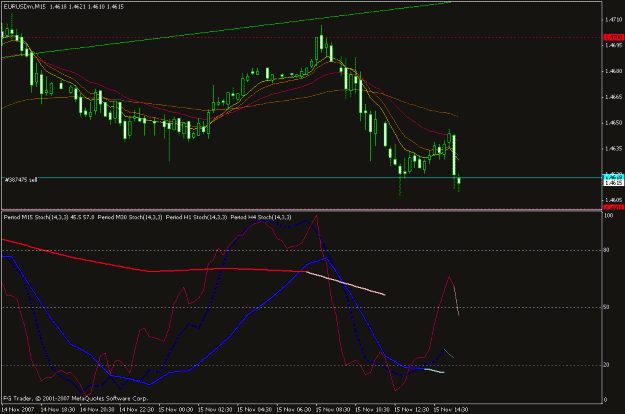
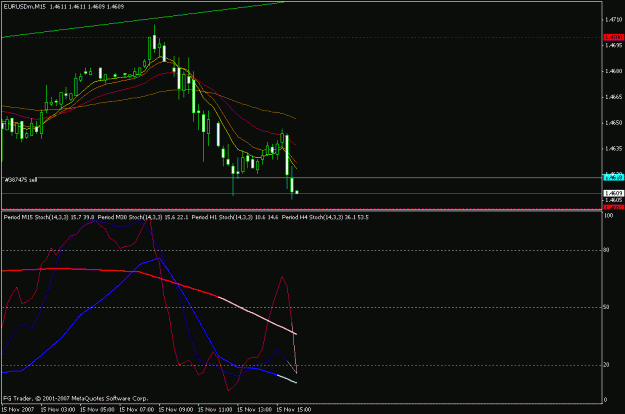
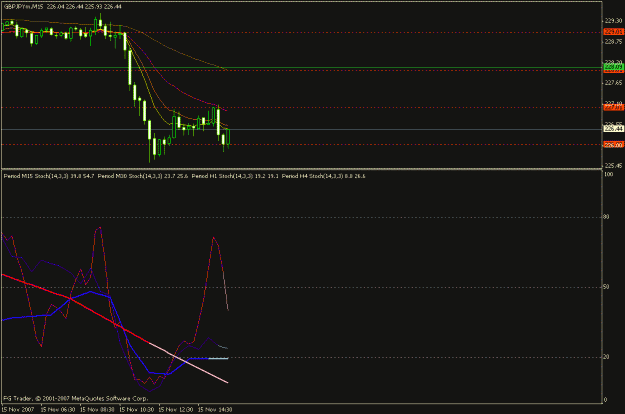
Thanks for sharing these charts with us. Your two-screen entry system looks very interesting, though trading the M1 tends to make me a little crazy. But it makes sense and is a classic rubber band trade, with modified time frames.
Please let us know how you progress with this method.
See you in the trenches...
Thanks for sharing these charts with us. Your two-screen entry system looks very interesting, though trading the M1 tends to make me a little crazy. But it makes sense and is a classic rubber band trade, with modified time frames.
Please let us know how you progress with this method.
See you in the trenches...
DislikedI'd like to review 2 charts.
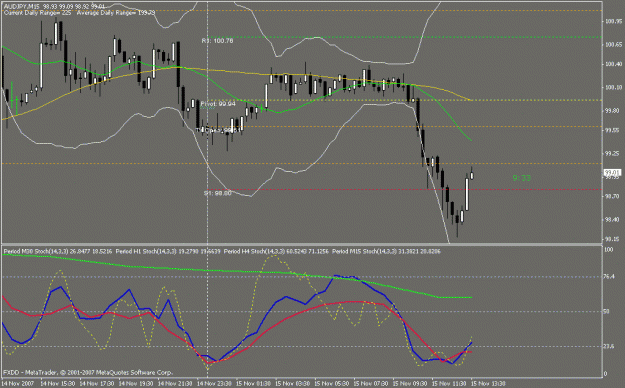
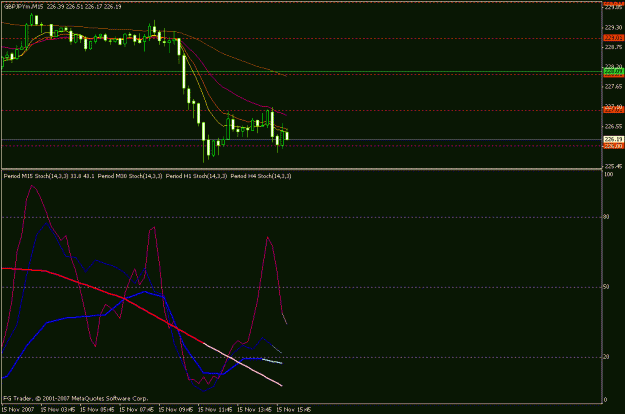
First the m15 chart shows a setup w spud MTF (I'm talking about the move up at the end of the chart). Have to be careful because the H4 is coming down, but in my opinion still very tradeable pattern because of the orderly way the M15, M30 and H1 come up from oversold and knowing that the pair is volitile enough to allow for catching pips on this type of move.
As soon as H1 crosses the 80 I switch to M1 and look for an entry. The first red line is that point. This one is as good as it gets for a visual on the entry. On M1, the M5 and M15 stochastic are above the 80, and M1 falls to oversold and makes a sharp turn up. On the cross of the 20 enter long. It's a rubberband trade setup on M1 using M1, M5 and M15 stochs. This was was for 40 pips with no heat.
Total time in trade - 10 minutes.
There are 3 other tradeable pattern on this chart where the M15 spikes higher and then falls down with the other stochs and they are marked by the first 3 red lines. Switch to M1 during these moves and you'll see what I mean re using M1 for the entry.
Thanks to others who are sharing lower time frame setup information - it seems to be helping me develop an approach for entry to reduce (but not eliminate) the heat on volatile pairs.
Cheers,
CanuckCTIgnored
Jeff Singer, K2KV