
USDCAD falls ahead of BoC interest rate decision
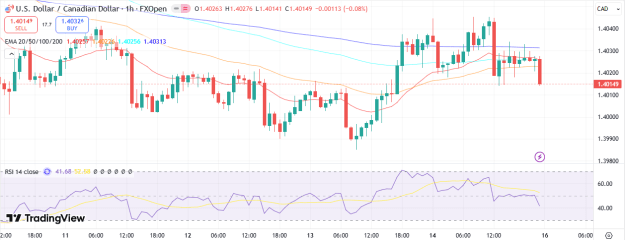
The USDCAD pair trended downward during the week's trading. Although price volatility was very high in the short term, downward pressure was dominant. The USDCAD charted a bearish candle on October 28th with a fairly long candle body. The price formed a high of 1.40056, a low of 1.39333, and a close of 1.39433. This indicates the Canadian dollar is strengthening against the US dollar ahead of today's BoC interest rate decision. The BoC is expected to cut interest rates by 25 basis points to 2.25%, before 2.50%. Theoretically, an interest rate cut tends to weaken the CAD because the return is relatively less attractive compared to the USD. On the other hand, the USD is expected to see an interest rate cut or easing by the Federal Reserve. Interest rate cuts tend to weaken currencies, but the USD still receives support from safe-haven flows and uncertain global conditions.
The CAD's strengthening on Tuesday appears to have been driven more by the report on US Consumer Confidence, which fell in October. The Consumer Confidence Index fell to 94.6 from a revised 95.6 in September, marking the second consecutive monthly decline. The US Dollar Index, which tracks the performance of the USD, has weakened slightly over the past five days, trending towards a doji with a lower low. The DXY is currently down at 98.717 from a high of 98.565.
Today's focus will shift to the risk of interest rate decisions from the Bank of China (BoC) and the Federal Reserve, which are preparing to announce their decisions. The market currently expects the Bank of Canada to cut interest rates due to a sharp slowdown in the Canadian economy, which shrank by 1.6% in the second quarter due to US steel/aluminum tariffs and high unemployment.
On the other hand, the Federal Reserve is also almost certain to cut interest rates after weaker-than-expected US inflation data last week, reinforcing expectations of a dovish Fed stance. The Fedwatch tool indicates a 99.9% probability of a 25 bps interest rate cut.
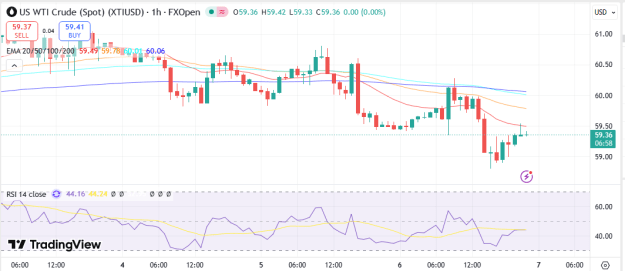
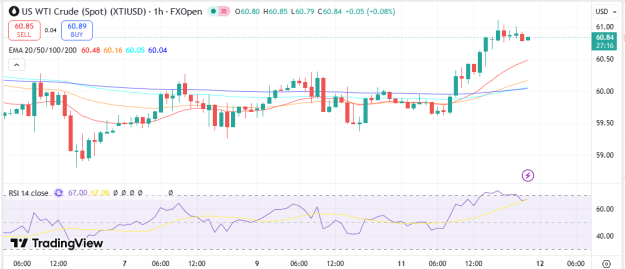
Canada relies heavily on oil exports, and oil prices are currently falling after ending a session of gains during last week's trading. Weakening oil prices could put pressure on the CAD against the USD. Analysts report that pension fund hedges against the CAD are declining, reducing the automatic support for the CAD.
Combining Canadian and US fundamentals, USDCAD has the potential to rise due to the BoC interest rate cut. Although the Fed is also expected to cut rates, it still enjoys support as a safe-haven currency, benefiting the USD. However, if there is a sharp rebound in oil prices or a surprisingly strong Canadian economy, the CAD could strengthen further.
Today's USDCAD price forecast: support range: 1.39000 - 1.39500, resistance range: 1.41000 - 1.41500.
The USDCAD pair trended downward during the week's trading. Although price volatility was very high in the short term, downward pressure was dominant. The USDCAD charted a bearish candle on October 28th with a fairly long candle body. The price formed a high of 1.40056, a low of 1.39333, and a close of 1.39433. This indicates the Canadian dollar is strengthening against the US dollar ahead of today's BoC interest rate decision. The BoC is expected to cut interest rates by 25 basis points to 2.25%, before 2.50%. Theoretically, an interest rate cut tends to weaken the CAD because the return is relatively less attractive compared to the USD. On the other hand, the USD is expected to see an interest rate cut or easing by the Federal Reserve. Interest rate cuts tend to weaken currencies, but the USD still receives support from safe-haven flows and uncertain global conditions.
The CAD's strengthening on Tuesday appears to have been driven more by the report on US Consumer Confidence, which fell in October. The Consumer Confidence Index fell to 94.6 from a revised 95.6 in September, marking the second consecutive monthly decline. The US Dollar Index, which tracks the performance of the USD, has weakened slightly over the past five days, trending towards a doji with a lower low. The DXY is currently down at 98.717 from a high of 98.565.
Today's focus will shift to the risk of interest rate decisions from the Bank of China (BoC) and the Federal Reserve, which are preparing to announce their decisions. The market currently expects the Bank of Canada to cut interest rates due to a sharp slowdown in the Canadian economy, which shrank by 1.6% in the second quarter due to US steel/aluminum tariffs and high unemployment.
On the other hand, the Federal Reserve is also almost certain to cut interest rates after weaker-than-expected US inflation data last week, reinforcing expectations of a dovish Fed stance. The Fedwatch tool indicates a 99.9% probability of a 25 bps interest rate cut.
Canada relies heavily on oil exports, and oil prices are currently falling after ending a session of gains during last week's trading. Weakening oil prices could put pressure on the CAD against the USD. Analysts report that pension fund hedges against the CAD are declining, reducing the automatic support for the CAD.
Combining Canadian and US fundamentals, USDCAD has the potential to rise due to the BoC interest rate cut. Although the Fed is also expected to cut rates, it still enjoys support as a safe-haven currency, benefiting the USD. However, if there is a sharp rebound in oil prices or a surprisingly strong Canadian economy, the CAD could strengthen further.
Today's USDCAD price forecast: support range: 1.39000 - 1.39500, resistance range: 1.41000 - 1.41500.
Attached Image (click to enlarge)

I trade at FXOpen