

So, talking about some timeless important points in this Forex Factory Forum:
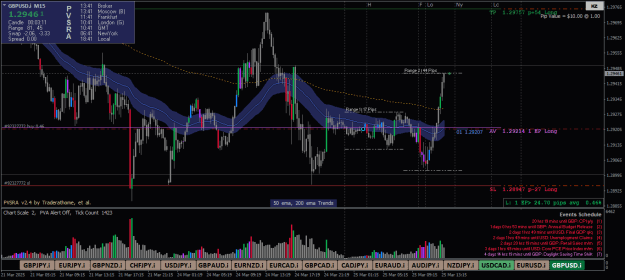
1. If you are only doing paper analysis, it has no merit at all for those who are learning (everyone is learning). That is just an analysis from an analyst. A trader is someone who executes trades, whether on a real or demo account on the chart, so observers can see where the SL is (or if there is no SL), where the TP is (or if there is no TP), where the Entry is. Some tools, like the Trade Level from the PVSRA system gifted by TAH, can be used to verify trades in a simple way. Whether you execute on a real or demo account is not an issue—on a real account, you get your profits, and on a demo account, you get your profits too (whether it's a regular demo or a prop firm demo). So, you are a trader who takes action according to your system. From both winning and losing trades, one can learn a great deal. Winning or losing doesn’t matter. If a trader has never lost significantly, don’t trust them. Some of the most unique ones even post their trade results without charts, and this is usually the work of broker agents. So not all of them are traders; many are just broker agents or cheerleaders. Regular charts are everywhere, but they don’t offer much value.
2. Only a few systems out of thousands have very good statistics spanning more than 3 or 4 months. Some are presented by system owners or educators, but 99% have nothing except thousands of charts filling up the thread.
3. Glory does not come from the number of pips gained in a day or dollar gain in a day, but from the consistency of daily percentage returns. That is what should be shown on the chart for newbies. A single trade gaining 100 pips might look impressive, and a 1:67 RR trade might seem extraordinary, or $10k a day is big wow! But it is less meaningful if it only accounts for 0.01%. Understanding the importance of the Kelly Criterion is fundamental in forex trading, and a trader should be able to scale their own risk percentage based on lot size, pip counts, pip value, and RR.
So Lel for Glory


1. If you are only doing paper analysis, it has no merit at all for those who are learning (everyone is learning). That is just an analysis from an analyst. A trader is someone who executes trades, whether on a real or demo account on the chart, so observers can see where the SL is (or if there is no SL), where the TP is (or if there is no TP), where the Entry is. Some tools, like the Trade Level from the PVSRA system gifted by TAH, can be used to verify trades in a simple way. Whether you execute on a real or demo account is not an issue—on a real account, you get your profits, and on a demo account, you get your profits too (whether it's a regular demo or a prop firm demo). So, you are a trader who takes action according to your system. From both winning and losing trades, one can learn a great deal. Winning or losing doesn’t matter. If a trader has never lost significantly, don’t trust them. Some of the most unique ones even post their trade results without charts, and this is usually the work of broker agents. So not all of them are traders; many are just broker agents or cheerleaders. Regular charts are everywhere, but they don’t offer much value.
2. Only a few systems out of thousands have very good statistics spanning more than 3 or 4 months. Some are presented by system owners or educators, but 99% have nothing except thousands of charts filling up the thread.
3. Glory does not come from the number of pips gained in a day or dollar gain in a day, but from the consistency of daily percentage returns. That is what should be shown on the chart for newbies. A single trade gaining 100 pips might look impressive, and a 1:67 RR trade might seem extraordinary, or $10k a day is big wow! But it is less meaningful if it only accounts for 0.01%. Understanding the importance of the Kelly Criterion is fundamental in forex trading, and a trader should be able to scale their own risk percentage based on lot size, pip counts, pip value, and RR.
So Lel for Glory
fooled by randomness in art
Meditation All Time Return:
8.9%
1