

Prop Firm DrawDown Protector : Prop Firm Capital Protection Expert MT5 | Forex Money Management: Forex Trade Management Expert MT5 | ICT Concepts Indicator MT5 |Smart Money Concepts Expert MT5 |Get a free Expert Advisor license via Telegram and WhatsApp
What Is Risk Management?
Risk management is a structured and systematic approach aimed at evaluating and mitigating potential losses by following established protocols. It involves a set of proactive measures designed either to prevent adverse events or to minimize their impact if they occur.
Types of Risk in Financial Markets
Understanding different types of financial risk is essential for building a resilient investment strategy. Risks in financial markets are typically divided into two primary categories:
- Systematic Risks
- Unsystematic Risks
This classification is foundational for professional portfolio management, risk hedging, and implementing loss control measures.
Systematic Risks
Systematic risk impacts the entire market or a large portion of the economy. These risks stem from macroeconomic variables or political developments and are generally unavoidable.
Examples of Systematic Risk Factors:
- Market Risk – Broad-based fluctuations in asset prices
- Interest Rate Risk – Changes in central bank policies and benchmark rates
- Inflation Risk – Reduced purchasing power and profitability due to inflation
- Geopolitical Risk – War, sanctions, or political instability
- Currency Risk – Volatility in exchange rates affecting asset valuation
Unsystematic Risks
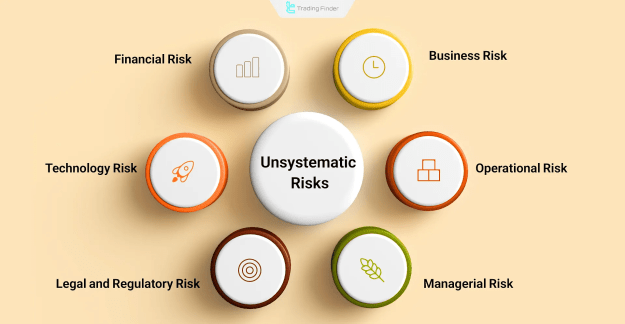
Unsystematic risk is specific to individual companies, industries, or sectors. These risks can typically be reduced or eliminated through effective portfolio diversification.
Key Unsystematic Risk Types:
- Business Risk – Company operations, product quality, and market position
- Financial Risk – Capital structure, leverage, and debt management
- Managerial Risk – Leadership quality and internal decision-making
- Operational Risk – Failures in systems, processes, or procedures
- Legal/Regulatory Risk – Exposure to lawsuits or regulatory changes
- Technological Risk – Dependence on outdated or inefficient systems
Liquidity Risk
Liquidity risk arises when an investor is unable to convert assets into cash without significant loss. This limits the ability to exit positions quickly or at favorable prices during market stress.
Psychological Risks
Emotional behavior and cognitive distortions often lead to poor decision-making in trading environments. Psychological risks can significantly compromise the effectiveness of a risk management strategy.
Common Psychological Risk Factors:
- Fear
- Greed
- Overtrading
- Herd Mentality
- Cognitive Biases
Key Differences Between Systematic and Unsystematic Risks
The core distinctions between systematic and unsystematic risks are based on their scope, controllability, and mitigation strategies.
Main Differences Include:
- Scope of Impact
- Systematic: Affects the entire market or economy
- Unsystematic: Limited to a specific asset or sector
- Control Mechanism
- Systematic: Cannot be eliminated, only managed
- Unsystematic: Can be mitigated through diversification
- Examples
- Systematic: Interest rate hikes
- Unsystematic: Corporate bankruptcy
- Management Approaches
- Systematic: Hedging, macroeconomic analysis, insurance
- Unsystematic: Diversification, asset allocation
Risk Management Strategies in Financial Markets
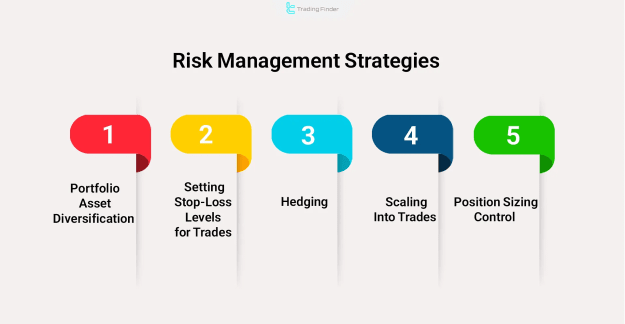
Effective risk management involves a series of strategic actions aimed at mitigating potential losses and maintaining consistent performance across different market conditions.
Proven Risk Management Techniques:
- Diversification of portfolio assets
- Application of stop-loss orders
- Hedging against unfavorable market moves
- Gradual scaling into positions
- Managing position size appropriately
Portfolio Diversification
Spreading investments across various asset classes—such as equities, currencies, commodities, and bonds—minimizes the negative impact of losses in a single asset or market.
Stop-Loss Strategy
Setting a predefined exit level helps to control losses by closing a position automatically when the market moves against it, thus preserving capital.
Hedging
Hedging strategies involve opening counter-balancing positions to neutralize potential losses from adverse price movements. This is a core component of institutional risk control.
Scaling Into Trades
Instead of investing the entire amount at once, traders can divide the capital and enter at multiple price points. This method reduces exposure to short-term volatility.
Position Sizing
Determining the appropriate size for each trade ensures better risk control and emotional discipline. It prevents overexposure and supports long-term market sustainability.
Key Steps in Risk Management
An effective risk management plan is executed through a structured process that consists of six fundamental steps:
1. Risk Identification
Recognize all potential risk factors, including market, liquidity, psychological, operational, or legal threats.
2. Risk Assessment & Analysis
Conduct quantitative and qualitative evaluations of each risk's likelihood and potential impact on trading capital.
3. Risk Prioritization
Assign urgency based on the severity and probability of each risk. Focus on managing the most critical threats first.
4. Risk Response Planning
Develop specific responses for each identified risk:
- Avoidance
- Reduction (using stop-loss, diversification)
- Transfer (via contracts or insurance)
- Acceptance (if risk is negligible)
5. Implementation of the Risk Management Plan
Apply the defined tools and strategies in actual trades or investment portfolios.
6. Monitoring & Review
Constantly observe market conditions and adjust the plan based on new data or past performance evaluations.
Risk Management vs. Capital Management
Risk management focuses on individual trades and minimizing loss from specific events, while capital management ensures the overall portfolio remains viable through sustained discipline.
Comparison of Core Features:
- Objective:
- Risk Management: Minimizes short-term trade losses
- Capital Management: Preserves long-term account integrity
- Primary Tools:
- Risk Management: Stop-loss, analysis, hedging
- Capital Management: Trade sizing, diversification, exposure limits
- Execution Timing:
- Risk Management: Prior to and during trade execution
- Capital Management: Continuously across the trading lifecycle
Common Mistakes in Risk Management
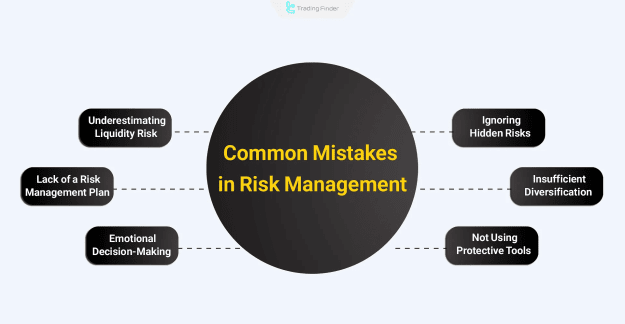
Neglecting risk management fundamentals can lead to severe and often irreversible financial damage.
Typical Risk Management Errors Include:
- Overlooking hidden risks (e.g., emotional or operational issues)
- Poor diversification of investment assets
- Failing to use protective measures like stop-loss orders
- Letting emotions dictate financial decisions
- Operating without a defined risk management strategy
- Underestimating the importance of liquidity during volatile conditions
Conclusion
Risk management is a cornerstone of successful trading in financial markets. By identifying, analyzing, and controlling both systematic and unsystematic risks, traders can significantly enhance their resilience against losses.
Incorporating tools such as diversification, stop-loss strategies, and psychological awareness into a coherent risk management plan enables investors to protect their capital and improve long-term profitability.