

TP & SL Tool: Risk Reward Ratio Calculator RRR MT5 | Prop Firm Protector: Trade Assist Prop Firm Plus TF Expert MT5 | Money Management + DrawDown Protector: Trade Panel Prop Firm Drawdawn Limiter Pro MT5 |Get a free Expert Advisor license via Telegram and WhatsApp
Relationship Between Margin and Leverage in Financial Trading
Both margin and leverage play interconnected roles in trading. Margin refers to the collateral required to initiate a position, while leverage amplifies the trader’s exposure in the market. Together, they determine how much market exposure a trader can achieve relative to their actual capital.
What Is Margin?
Margin is the specific amount of funds that a trader must maintain in their trading account to open and sustain a position. It acts as a form of security deposit provided to the broker, ensuring that the trader can cover potential losses.
- Margin is typically expressed as a percentage of the total trade size.
- It enables traders to take positions without needing the full value of the trade.
- Brokers require this margin as assurance for facilitating leveraged trading.
Tip: Use our online margin calculator to determine the exact margin requirement for your desired trade size and leverage.
What Is Leverage?
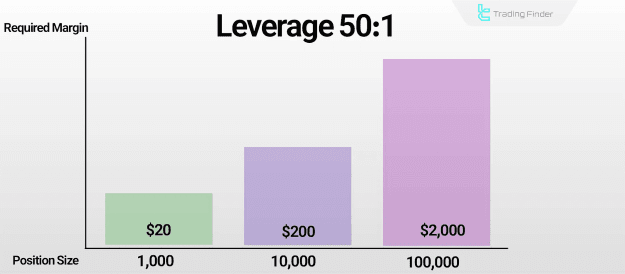
Leverage allows traders to control a larger position with a smaller amount of capital. It is expressed in the form of a ratio, such as 50:1 or 100:1, indicating the degree of exposure a trader can gain relative to their margin.
- With 50:1 leverage, a trader can control $50 in the market for every $1 of actual capital.
- The use of leverage magnifies both potential gains and losses.
Example Calculations:
- A trader using 25:1 leverage with $4,000 capital can control:
$4,000 × 25 = $100,000 - A trader using 75:1 leverage with $2,000 capital can control:
$2,000 × 75 = $150,000
Key Differences Between Margin and Leverage
Though margin and leverage are interconnected, they serve distinct purposes in trading.
Core Distinctions
- Margin: Represents the actual funds held as collateral to initiate a trade.
- Leverage: Represents the increased exposure a trader gains through borrowing from the broker.
Additional Differences
- Margin is calculated as a percentage of the trade volume.
- Leverage is determined by multiplying initial capital with the leverage ratio.
- Margin usage limits losses to the capital held as margin.
- Leverage increases both profit and loss potential, depending on market movements.
- Margin is applicable in all financial markets, including Forex and equities.
- Leverage is more prevalent in Forex and cryptocurrency trading.
The Inverse Relationship Between Margin and Leverage
There is an inverse correlation between margin and leverage:
- Lower margin requirements enable higher leverage usage.
- Higher leverage reduces the amount of margin required per trade.
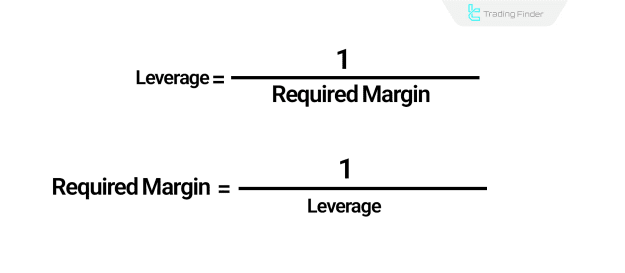
This relationship can be expressed through simple formulas:
- Leverage = 1 / Margin Requirement
- Margin Requirement = 1 / Leverage
Example: Forex Margin and Leverage Ratios
The examples below demonstrate how margin requirements influence the leverage available in Forex trading:
- EUR/USD: 2% margin requirement = 50:1 leverage
- GBP/USD: 5% margin requirement = 20:1 leverage
- USD/JPY: 4% margin requirement = 25:1 leverage
- EUR/AUD: 3% margin requirement = 33:1 leverage
Comparing Margin Usage in Forex and Stock Markets
There are fundamental differences in the way margin is applied across different financial markets:
In the Stock Market:
- Margin trading refers to borrowing money from a broker to purchase securities.
- The trader pays interest on the borrowed funds, making it a loan-based system.
In the Forex Market:
- Margin is used as a deposit or collateral to open a leveraged position.
- There is no borrowing in the traditional sense; the margin simply enables access to larger positions.
Summary
Margin and leverage are pivotal in managing capital efficiently and controlling risk exposure in trading. While margin acts as the required collateral for trade execution, leverage magnifies a trader’s market exposure relative to their account balance.
Key Takeaways:
- Margin enables trade execution without full capital outlay.
- Leverage enhances profit potential but simultaneously increases risk.
- Lower margin requirements lead to higher leverage opportunities.
- Understanding the margin–leverage relationship is critical for successful trading strategies.
Mastering the use of margin and leverage allows traders to optimize their risk-to-reward ratio, making these tools indispensable in professional trading environments.