

One Shot One Kill Indicator:
One Shot One Kill Indicator MT4
One Shot One Kill Indicator MT5
What Is the ICT One Shot, One Kill (OSOK) Strategy?
The ICT OSOK strategy emphasizes precision trading, reducing trade frequency while increasing win probability. Traders using this model aim for high R:R setups, capitalizing on institutional order flow and liquidity grabs.
Key elements of this model include:
- Analyzing Weekly Bias and Draw on Liquidity
- Waiting for major news events (e.g., FOMC, NFP) to trigger volatility
- Executing trades during optimal Kill Zones (London and New York sessions)
Core Elements of the OSOK Strategy
The strategy aims to generate weekly profits by focusing on:
- Weekly Bias Analysis
- Liquidity Pools Identification
- Reaction to Economic News Releases
- Trade Entry within Institutional Price Levels
- Execution in Time-Based Kill Zones
Institutional Entry Zones (OTE Levels)
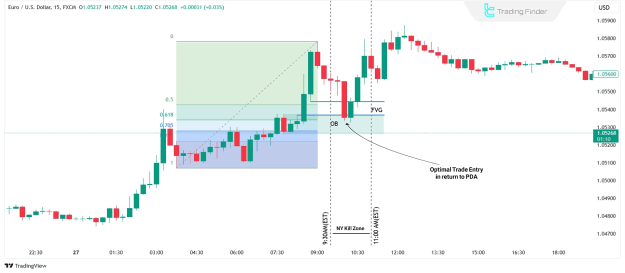
- Trade entries are typically executed within the 61.8% to 78.6% Fibonacci retracement zone.
- These levels are strategically aligned with Optimal Trade Entry (OTE) concepts, reflecting institutional order execution zones.
Step-by-Step Breakdown of the ICT OSOK Strategy
Step 1: Weekly Preparation
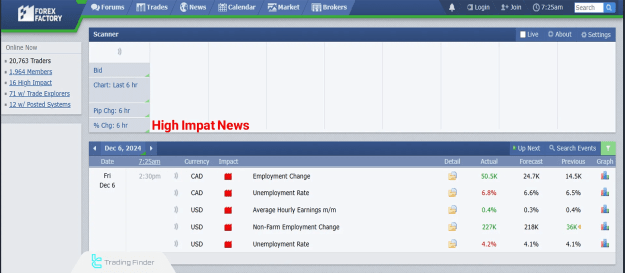
Economic news releases play a critical role in creating liquidity shifts and price inefficiencies. Traders must review all relevant events and analyze their potential impact on market structure.
Key economic data to monitor includes:
- Central Bank Interest Rate Decisions
- Inflation Indicators: CPI, PCE, PPI
- Employment Data: Non-Farm Payrolls (NFP), Unemployment Rate
- GDP Releases
- Manufacturing & Services PMI
Execution tips:
- Focus on the first hour of the London session, where institutional activity is highest.
- Use platforms like Forex Factory to monitor high-impact news that could trigger the OSOK setup.
Step 2: Market Structure & Liquidity Assessment
After identifying news catalysts:
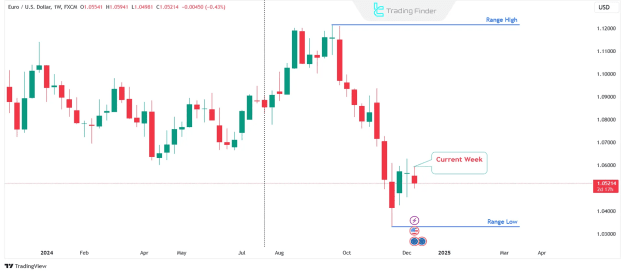
- Refer to the Weekly Chart
- Define the IPDA (Interbank Price Delivery Algorithm) range over the past 20 weeks
- Mark the highest high and lowest low in that range
- Identify the next Draw on Liquidity target
- Align with PD Arrays (Price Delivery Arrays) that reflect the weekly bias
This structure helps to forecast where price will likely be drawn, post-news volatility.
Step 3: Identify Trade Opportunities
Within a defined 50–75 pip range:
- In bullish order flow (OF): Target Buy-Side Liquidity (BSL)
- In bearish order flow (OF): Target Sell-Side Liquidity (SSL)
Seek divergence between price and bias around institutional events.
Step 4: Trade Execution
Execute trades in alignment with the identified bias and liquidity targets, focusing on the London or New York Kill Zones.
Bearish Setup Execution:
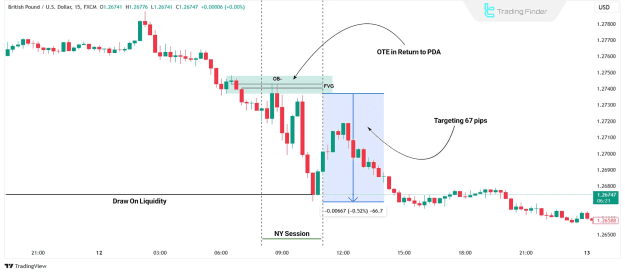
- Wait for a retracement toward a bearish PD Array
- Monitor the 15-minute chart for precision entry
- Enter short positions after a buy-side liquidity sweep
Bullish Setup Execution:
- Wait for a retest of a bullish PD Array
- Enter after a sell-side liquidity sweep
- Confirm with confluence from high-impact news timing
Step 5: Risk and Trade Management
Effective trade management in the OSOK strategy involves:
- Avoiding stop losses at obvious liquidity levels
- Placing stops beyond order blocks or significant market structure zones
- Setting limit orders with a 50 pip initial profit target
- Closing 80% of the trade at 50 pips and trailing the remainder to 75 pips
This risk management approach safeguards capital while maximizing reward.
Conclusion
The ICT One Shot, One Kill (OSOK) strategy offers a structured framework for precision trading, using institutional concepts such as Fair Value Gaps, PD Arrays, and liquidity voids. By aligning with economic catalysts and leveraging time-sensitive market zones, traders can execute high-probability trades with clearly defined targets.
This model requires:
- Patience
- Discipline
- Deep understanding of market structure and liquidity mechanics
For enhanced execution, traders may also utilize the One Shot One Kill Indicator developed by TradingFinder, which integrates this methodology with Market Maker models. This tool enhances structural identification and boosts execution accuracy, making it a practical resource for traders pursuing consistent results with the ICT OSOK strategy.