Forex Factory
  • Login

  • Username: Password:
  • 9:13pm

  • Search
  • Home

  • Forums

  • Trades

  • Calendar

  • News

  • Market

  • Brokers

Options

Search
Search
Search

Subscribe to Thread

Bookmark Thread

First Page First Unread Last Page Last Post

Printable Version

Similar Threads

Trade Anatomy - ramblings of an old-timer 147 replies

Need forex writers to write UNIQUE Daily forex technical analysis and forex news 2 replies

  • Trading Discussion
  • /
  • Reply to Thread
  • 460

Ramblings of a Forex Junkie

  • Last Post
  • First Unread
  •  
  • 1 34Page 567 188
  •  
  • Post# 81
  • Quote
  • Jan 14, 2013 9:17am
  • billytt
    Joined Feb 2009 | 2,698 Posts | Status: Member
[quote=Seneca pilot;6361706]Ok back to the thread.

A common strategy is to bracket a range of prices and then trade a breakout of the area. Big ben, Big dog, Asia channel, and opening range are a few of the popular variations on the theme.

If your strategy works for you that is great, when a pair is ranging that is indecision, something similar to an inside bar.With experiance a trader will know when to trade the break out and then think as to how many pips to go for.Rbe goodanging also happens frequently at certain times this is also a good time not to trade. Be good.
A UNICORN IS FOR LIFE NOT UNTIL IT GIVES A BAD TRADE
  • Post# 82
  • Quote
  • Jan 14, 2013 8:06pm | Edited at 11:55pm
  • Seneca pilot
    Joined May 2011 | 1,636 Posts | Status: Member
Poker and Trading are remarkably similar. Both pursuits are skill based speculation with a large short term luck factor. When you make bets in poker you are speculating that the large number averages are in your favor. There is very little luck in the game of poker over a long run if you are a proficient player. On any given hand, however luck plays a very big factor. In hold-em excellent hands are routinely beaten with rags as the board develops. Over thousands of hands however the player who plays the better hands and avoids the bad ones will come out ahead.

In poker, like trading the player has the ability to change the outcome throughout the hand (trade). It is up to the free will of the player to pass, call, bet, raise, reraise, or fold as each new card hits the board. The trader faces the same type of decision process as the trade develops. The trader may choose to stay with their original position, add to their position, cut the size of their position, leave the position to the devices of the market, place a stop on the position, exit the position at signs of exhaustion, have a set profit target, have a floating target, take partial profits, etc.

This free will with respect to the decision process opens the door to many problems. Traders often will exit a winner at the first sign of any adverse price movement even though the movement may just be part of the normal ebb and flow of the market. Traders also often will exit a position at a loss before their stop is hit and while patting themselves on the back for saving the money watch the position turn around and move into profit.
Traders also will often move their stop to breakeven plus one pip prematurely and watch in horror as the stop is taken out and then the position moves into profit. These behaviors may be caused by a combination of factors. The trader may have seen a winner turn to become a large loss in his or her past trading. The trader may be afraid of losing profits that he or she has mentally tallied. The trader may be trading positions too large for their account size and not be comfortable with the loss a properly sized stop may inflict on his or her account balance. The trader may habitually trade without stops and take profits prematurely when not able to minitor their trade.

The obvious answer to these problems is to use a stop, size your positions properly, and use the appropriate stop distance from entry to allow the market room to breathe. I would argue that there is another factor not often discussed. In learning poker the player will eventually begin to study game theory and mental discipline. In this study the player learns that to deal with the inevitable losses that come with playing a game with such a short term luck factor he or she must learn to mentally divorce themselves from the money. One thing that helps with this is that poker is played with chips instead of actual cash. The player must eventually though come to the realization that money is only the way of keeping score in the game and cannot be thought of in terms of what it is worth to the player. In this respect trading and poker are identical. In trading you will never know the outcome of a particular trade when you enter just as you can never know if your aces will hold up in poker.

And now the truth:

In trading as in poker before you click on the mouse to execute a trade, you must divorce yourself from the money. It is after all only a means to keep score.

Hope it helps
  • Post# 83
  • Quote
  • Jan 14, 2013 9:24pm
  • Seneca pilot
    Joined May 2011 | 1,636 Posts | Status: Member
Not exactly on the topic of this thread but:

Which currency do you think the BOJ will use to burn all the traders holding the Yen.

I think that not that many are in GBP/JPY, but EUR/JPY seems a good place to burn as many as possible.

What do you guys think?
  • Post# 84
  • Quote
  • Jan 14, 2013 9:44pm
  • Seneca pilot
    Joined May 2011 | 1,636 Posts | Status: Member
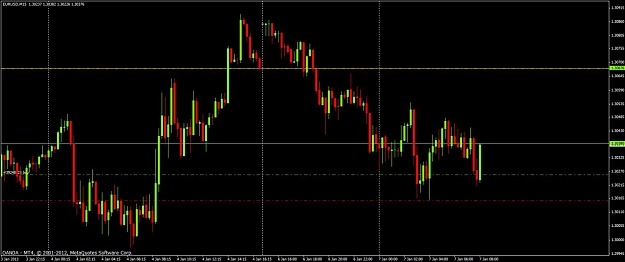
Another excellent argument for trading levels.

Guess BOJ decided not to screw us all after all. Close below the purple one might hold all week.
Attached Image (click to enlarge)
Click to Enlarge

Name: nice trade.jpg
Size: 66 KB
  • Post# 85
  • Quote
  • Jan 14, 2013 9:56pm
  • nubcake
    Joined Oct 2009 | 2,372 Posts | Status: schadenfreude tastes like joy
it's undeniable that trading and poker have similarities. but, their differences may be more important than their similarities. you could say that as you push more into a 'winning hand' in a trade that the 'rake' increases, unlike poker. the 'rake' also gets worse the faster the timeframe you are looking to 'play your hand' in.

so, keeping in mind how much the rake screws you over in trading... then taking into consideration how many hands in a game of actual poker you automatically fold and don't waste your chips on, plus if not playing a cash game of poker how many games do you end-up winning versus losing and what stats does your overall edge come out to be, or if playing a cash game how many hands actually played does it take before you can confidently acknowledge that you have made progress and have pushed through a plateau. (edit) there was a sentence in there somewhere, but apparently i got distracted. (/edit)

i don't know about you, but when i play (electronic) poker i fold a LOT. and then after playing the hands i don't fold i still end-up losing more games than i win... but overall the games i do win over time pay out more than i lose. but that's a lot of hands not played, plus a lot of games not won, before finally making some statistically significant headway.

having to overcome the spread in cfd's / forex extends the timeline of individual hands tremendously if you don't want the 'rake' to be almost as much as your potential pot winnings, and thus it extends the timeline of all other stats. cfd's and forex, taken in this poker perspective, are just bad.
  • Post# 86
  • Quote
  • Jan 14, 2013 11:40pm
  • Seneca pilot
    Joined May 2011 | 1,636 Posts | Status: Member
Quoting nubcake
it's undeniable that trading and poker have similarities. but, their differences may be more important than their similarities. you could say that as you push more into a 'winning hand' in a trade that the 'rake' increases, unlike poker. the 'rake' also gets worse the faster the timeframe you are looking to 'play your hand' in.

so, keeping in mind how much the rake screws you over in trading... then taking into consideration how many hands in a game of actual poker you automatically fold and don't waste your chips on, plus if not playing a...
I am not sure the point you are trying to make here but the rake is to poker as the spread is to trading. If you choose not to play a hand of poker you pay no rake. If you choose not to enter a trade you pay no spread. These are simply a cost of business in either case. The tough thing about poker is that you must pay blinds and antes whether you play a hand or not. This makes trading seem like a great deal. There is no cost to be at the table and you get to pick your spots and only enter when your edge presents itself.

I am not sure if you have read the entire thread, but I have attempted to make the point more than once that no matter the timeframe one trades one should pick their spots carefully and avoid overtrading. Overcoming the spread is pretty simple if you keep your targets significantly larger than your stops. The timeframe one trades is irrelevant. A trader can enter once or twice a week using a five minute chart for entry and hold the trades for large targets just the same as one might trade a one hour chart. The spread only becomes a problem when one chooses to trade in the wrong spots, at the wrong times, and for targets that are too small.

Hopefully you are in aggreement since you also play poker that one must not think of the importance of money when trading or playing cards as that will cause the player (trader) to make poor decisions.
  • Post# 87
  • Quote
  • Jan 15, 2013 12:17am
  • nubcake
    Joined Oct 2009 | 2,372 Posts | Status: schadenfreude tastes like joy
Quoting Seneca pilot
I am not sure the point you are trying to make here but the rake is to poker as the spread is to trading. If you choose not to play a hand of poker you pay no rake. If you choose not to enter a trade you pay no spread. These are simply a cost of business in either case. The tough thing about poker is that you must pay blinds and antes whether you play a hand or not. This makes trading seem like a great deal. There is no cost to be at the table and you get to pick your spots and only enter when your edge presents itself.

I am not sure if you have...
i'm a retard. i meant the blinds, not so much the rake. though that comes into it. clearly i'm no pro poker player, but the comparisons between trading i find interesting.

as for the spread costs and timeframe.... what i was alluding to is that with trading the larger the timeframe generally means the larger the target, and hence the less the spread costs in comparison to the potential r/r. obviously it doesn't actually matter the timeframe as the prices move to the same places on all timeframes (i feel dumb even typing such an obvious thing), it's all about r/r. someone on a tick chart isn't generally looking for 500 pips.

so what i'm getting at is that lower timeframes (and hence lower targets) is like playing a poker hand that costs you 5 dollars to play but most of the time the pot only ever gets to a total of 10 dollars, so a winning hand is not really worth it while all of the losing hands are breaking your bankroll over time.

so if you have larger targets then the general time it takes to reach said target is looooonger. If you play poker like i do then most of the time you are sitting on the sidelines waiting for a decent hand to even bother playing, and THEN some of the time you still lose, and EVEN THEN MOST of the time i'll lose a whole game.... but after about 20 or so whole games the times i do 1st place more than makes-up for the previous losses. so, positive expectation. similarly with unending cash games, it takes a lot of rounds before showing a clear positive expectation.

the way i play poker compared to trying to trade to larger targets, taking into consideration how long the market generally takes to dick around and get anywhere, suggests to me that if i traded like i played poker it would take me a few decades to show statistically significant monetary progress in trading.

as for the spread / blinds / rake... you get the button and you have to play, regardless. so every n hands you are in it no matter what. cost of playing. but if you choose or are forced into playing you are then in control of your chips and don't get 'charged the spread' if you ante up. on the flipside with trading you can happily sit on the sidelines and never be 'forced' into playing due to the button, but each time you 'ante up' you have the spread working against you.

perhaps in some sense being forced into hands in poker and having the spread hit you as you increase a position wash-out and are, in the end, somewhat equal in their impact on your funds. it's a fuzzy number to figure out.

that's basically what i was trying to say. if i was trying to say anything.

edit : yes, the money shouldn't matter.
  • Post# 88
  • Quote
  • Jan 15, 2013 2:15am
  • Seneca pilot
    Joined May 2011 | 1,636 Posts | Status: Member
Funny thing happened last night. I fell asleep with a couple of positions open. Apparently while I was asleep my computer updated and restarted. The trade platform apparently reset to an previous time that was stored in the computer's cache. When I woke up one position had taken profit already but the other had not. The one that had not taken profit was below the line that I would have expected it had taken profit (I color code my lines). In my groggy state I quickly closed the trade thinking maybe I had forgotten to set the TP. Well I actually closed it early because the computer restart somehow moved the line.

The truth:

You should never make trading decisions when you are tired or otherwise impaired.

Nitey night.
  • Post# 89
  • Quote
  • Jan 15, 2013 4:15am
  • billytt
    Joined Feb 2009 | 2,698 Posts | Status: Member
all agreed poker is similar to trading. I have said that more than once in my posts. similar as in waiting for a good hand (entry) and knowing odds and statistics. I stopped playing poker online due to robots and piss heads and now wit my brains against bankers, politicians etc lol
A UNICORN IS FOR LIFE NOT UNTIL IT GIVES A BAD TRADE
  • Post# 90
  • Quote
  • Jan 15, 2013 4:23am
  • billytt
    Joined Feb 2009 | 2,698 Posts | Status: Member
[quote=Seneca pilot;6364534]Not exactly on the topic of this thread but:

Which currency do you think the BOJ will use to burn all the traders holding the Yen.

i think that does it really matter??? if it goes it goes whether up or down. i do not actually trade e/j u/j g/j if i do trade them i would of been with them. Plus thinking in trading is a dangerous game. Be good
A UNICORN IS FOR LIFE NOT UNTIL IT GIVES A BAD TRADE
  • Post# 91
  • Quote
  • Jan 15, 2013 5:33am
  • AM BiH
    Joined Jan 2013 | 14 Posts | Status: Member
Quoting billytt
all agreed poker is similar to trading. I have said that more than once in my posts. similar as in waiting for a good hand (entry) and knowing odds and statistics. I stopped playing poker online due to robots and piss heads and now wit my brains against bankers, politicians etc lol
But here chances are bigger because you don't fight against pure mathematics but against irrational crowd.
  • Post# 92
  • Quote
  • Jan 15, 2013 6:03am
  • billytt
    Joined Feb 2009 | 2,698 Posts | Status: Member
Quoting AM BiH
But here chances are bigger because you don't fight against pure mathematics but against irrational crowd.


i agree , i was making the point of saying how poker uses statistics and odds the same as trading
A UNICORN IS FOR LIFE NOT UNTIL IT GIVES A BAD TRADE
  • Post# 93
  • Quote
  • Jan 15, 2013 8:53am
  • stevexyg
    Joined Nov 2008 | 782 Posts | Status: b/e since 2007
The similarities are not actually all that great. No trading session has ever ended with an exchange of insults, spilled whiskey, an upturned table and a gun fight between a bunch of unwashed guys in cowboy hats. Has it?!
  • Post# 94
  • Quote
  • Jan 15, 2013 9:50am
  • Seneca pilot
    Joined May 2011 | 1,636 Posts | Status: Member
Quoting stevexyg
The similarities are not actually all that great. No trading session has ever ended with an exchange of insults, spilled whiskey, an upturned table and a gun fight between a bunch of unwashed guys in cowboy hats. Has it?!
Video of the bond trading pits often looks a lot like what you described.
  • Post# 95
  • Quote
  • Jan 15, 2013 1:37pm
  • billytt
    Joined Feb 2009 | 2,698 Posts | Status: Member
Quoting stevexyg
The similarities are not actually all that great. No trading session has ever ended with an exchange of insults, spilled whiskey, an upturned table and a gun fight between a bunch of unwashed guys in cowboy hats. Has it?!
you get all that in these threads lol. On a serious note you will find that people who study charts, odds, percentages will win and it doesnt matter if its poker or trading
A UNICORN IS FOR LIFE NOT UNTIL IT GIVES A BAD TRADE
  • Post# 96
  • Quote
  • Jan 15, 2013 2:02pm
  • Seneca pilot
    Joined May 2011 | 1,636 Posts | Status: Member
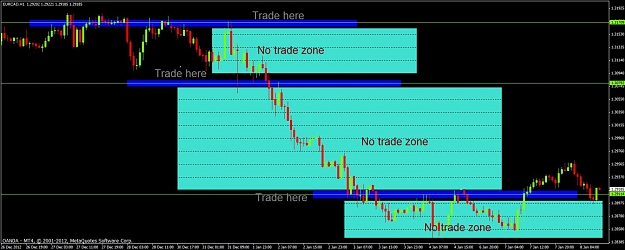
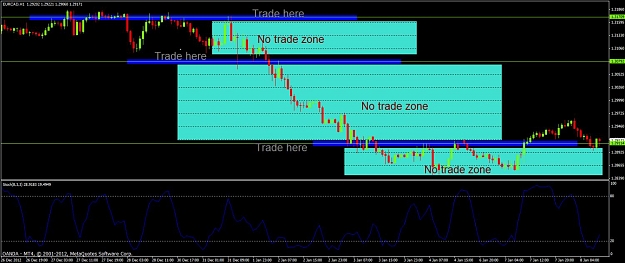
Ok I take it all back levels don't work and you should forget I ever said a word about it.
Attached Image (click to enlarge)
Click to Enlarge

Name: nice trade.jpg
Size: 85 KB
  • Post# 97
  • Quote
  • Jan 15, 2013 2:04pm | Edited at 3:50pm
  • Seneca pilot
    Joined May 2011 | 1,636 Posts | Status: Member
Nope no evidence these levels work at all.
Attached Image (click to enlarge)
Click to Enlarge

Name: levels work.jpg
Size: 77 KB
  • Post# 98
  • Quote
  • Jan 15, 2013 3:07pm
  • Seneca pilot
    Joined May 2011 | 1,636 Posts | Status: Member
Quoting AM BiH
But here chances are bigger because you don't fight against pure mathematics but against irrational crowd.
There is nothing more irrational than the average poker player. Only the good ones follow the math.
  • Post# 99
  • Quote
  • Jan 15, 2013 6:03pm
  • Seneca pilot
    Joined May 2011 | 1,636 Posts | Status: Member
Nice trading the last two weeks. Markets have been behaving well, Back later.

Inserted Video
  • Post# 100
  • Quote
  • Jan 16, 2013 1:26am | Edited at 1:43am
  • PiptheRipper
    Joined Aug 2009 | 128 Posts | Status: Member
Quoting Seneca pilot
Ok I take it all back levels don't work and you should forget I ever said a word about it.
Well done!

Thanx for sharing some charts with levels and trade examples. It's highly appreciated. I have a couple of questions though.

1.) Regarding your levels, I have realized you use the following: Weekly close, weekly open, Previous day's High and low, Daily open and also the London session close. You probably have others as well, but these are the ones I have picked up in thread.

Now depending on the broker you use, you'll have different levels. The weekly close and the London session remains the same, but the rest all changes depending on the time zone. For example your daily open and weekly open is drawn at -6 GMT. (Correct me if I'm wrong) My broker which is based in London will be 0 GMT. Therefore we have different levels. So my question is, do you base this time on your broker open time or is it a fixed time which is significant for you, regardless of broker or time zones? From your chart examples it does look like a significant level, but why that time?
"The wisest men follow their own direction" Euripides
Thread Tools Search this Thread
Show Printable Version Show Printable Version
Email This Thread Email This Thread
Search this Thread:

Advanced Search

  • Trading Discussion
  • /
  • Ramblings of a Forex Junkie
  • Reply to Thread
    • 1 34Page 567 188
1 trader viewing now
  • More

©2013 Forex Factory, Inc. / Terms of Use / Privacy Policy

Forex Factory® is a registered trademark.

Connect

  • Facebook
  • Twitter
  • RSS

Company

  • About FF
  • FF Blog
  • Careers at FF
  • Advertising
  • Contact FF

Products

  • Forums
  • Trades
  • Calendar
  • News
  • Market
  • Brokers
  • Trade Explorer

Website

  • Homepage
  • Search
  • User Guide
  • Member List
  • Online Now
  • Report a Bug